

Torreya Nut / Kaya Nut 40-60 cm (Torreya nucifera)
Estimated delivery to you: 27 October to 03 November.
Torreya nut: current height: 40-60 cm
Common names: Torreya nut, Japanese Torreya, Kaja nut, Kaya Nut, Japanese Nutmeg-Yew
Scientific name: Torreya nucifera
Family: Taxaceae
Growth history & use:
Japanese Torreya, or Torreya nut, originates from Japan where it is used similarly to T. grandis in China – the nuts are roasted and eaten or pressed for their vitamin-rich oil. The wood is also used for special purposes – read below...
The wood from the Japanese Torreya is considered the most valuable wood for making boards and pieces for the game Go. The wood is prized for its beautiful yellow-golden color, fine and uniform ring structure, and the distinct sound from the click of a stone (piece) against its surface.
The tree is protected in Japan due to its scarcity caused by earlier overharvesting. Only the truly old (200-800 years old) Japanese Torreya trees are considered suitable for making the thick Go boards – which makes them highly valued. The finest boards can cost over 19,000 USD.
The wood is also considered durable when in contact with water. Wooden water buckets are made from this wood.
It is also a traditional medicinal plant in Korea where the nuts are highly valued for their antiparasitic properties. Even in modern times, the tree has been successfully used in scientific studies where several plant parts such as leaves and nuts have shown to have an inhibiting effect on virus replication. (Please conduct further research if interested.)
The oil from pressed nuts is burned during meditation in Japanese Buddhism.
The nuts are described as having a pleasant, sweet, and slightly resinous, aromatic taste.
On top of everything, the tree is very beautiful when mature, gaining a classic and dignified appearance with age.
Cultivation:
The Torreya nut tree grows 15-25 meters tall and can have a broad trunk up to 1.5 meters in diameter.
Thrives in most soils, preferably on the more acidic (pH) and moist side. Does not like to stand in places exposed to strong wind, so a more sheltered location is recommended. Prefers places with high air humidity, or moist soil along a stream bank or similar. Let it grow in partial shade.
Hardy down to -18ºC.
Most individuals seem to have both male and female flowers – which is needed to produce fruit. However, each individual tends to have a significant majority of either male or female flowers. So indeed, one individual should be enough for nut production, although production would likely benefit from the presence of two individuals.
Characteristics:
Lifespan: Perennial
Growing position: partial shade
Height: 15-25 m
Growing zone: approx. 1-3
Subscribe and save 5%!


Torreya Nut / Kaya Nut 40-60 cm (Torreya nucifera)
Orders received before Sunday morning are packed Sunday to Monday.
See our delivery terms.
Out of stock
Notify me when the product is in stock:
Share
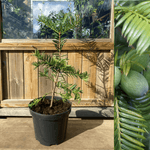
Torreya nut: current height: 40-60 cm
Common names: Torreya nut, Japanese Torreya, Kaja nut, Kaya Nut, Japanese Nutmeg-Yew
Scientific name: Torreya nucifera
Family: Taxaceae
Growth history & use:
Japanese Torreya, or Torreya nut, originates from Japan where it is used similarly to T. grandis in China – the nuts are roasted and eaten or pressed for their vitamin-rich oil. The wood is also used for special purposes – read below...
The wood from the Japanese Torreya is considered the most valuable wood for making boards and pieces for the game Go. The wood is prized for its beautiful yellow-golden color, fine and uniform ring structure, and the distinct sound from the click of a stone (piece) against its surface.
The tree is protected in Japan due to its scarcity caused by earlier overharvesting. Only the truly old (200-800 years old) Japanese Torreya trees are considered suitable for making the thick Go boards – which makes them highly valued. The finest boards can cost over 19,000 USD.
The wood is also considered durable when in contact with water. Wooden water buckets are made from this wood.
It is also a traditional medicinal plant in Korea where the nuts are highly valued for their antiparasitic properties. Even in modern times, the tree has been successfully used in scientific studies where several plant parts such as leaves and nuts have shown to have an inhibiting effect on virus replication. (Please conduct further research if interested.)
The oil from pressed nuts is burned during meditation in Japanese Buddhism.
The nuts are described as having a pleasant, sweet, and slightly resinous, aromatic taste.
On top of everything, the tree is very beautiful when mature, gaining a classic and dignified appearance with age.
Cultivation:
The Torreya nut tree grows 15-25 meters tall and can have a broad trunk up to 1.5 meters in diameter.
Thrives in most soils, preferably on the more acidic (pH) and moist side. Does not like to stand in places exposed to strong wind, so a more sheltered location is recommended. Prefers places with high air humidity, or moist soil along a stream bank or similar. Let it grow in partial shade.
Hardy down to -18ºC.
Most individuals seem to have both male and female flowers – which is needed to produce fruit. However, each individual tends to have a significant majority of either male or female flowers. So indeed, one individual should be enough for nut production, although production would likely benefit from the presence of two individuals.
Characteristics:
Lifespan: Perennial
Growing position: partial shade
Height: 15-25 m
Growing zone: approx. 1-3

30 day returns
- Choosing a selection results in a full page refresh.
- Opens in a new window.