

Cranberry Roselle / Blood Hibiscus in various sizes 60-130 cm (Hibiscus acetosella)
Estimated delivery to you: 08 October to 15 October.
Cranberry Roselle / Blood Hibiscus in Various Sizes
Height:
- 60–90 cm
- 100-130 cm
Common names: Cranberry Roselle, Blood Hibiscus, Cranberry Hibiscus, red-leaved hibiscus, African rosemallow
Scientific name: Hibiscus acetosella
Family: Mallow family
Plant history & use
Cranberry Roselle is a close relative to the better-known roselle Hibiscus sabdariffa, but with better cold tolerance and unique dark red foliage that makes it as beautiful as it is useful. It is grown both as an ornamental plant and for its edible parts – both fruit and leaves have a long tradition in food and drink.
The leaves have a fresh, tart taste reminiscent of cranberries and can be used fresh in salads, as a flavorful splash of color in stir-fries, or lightly cooked like spinach.
The fruits are used in the same way as those of H. sabdariffa to make a delicious cooling juice, but also for jelly and marmalade. They are rich in antioxidants and vitamin C and give an intense color to drinks and desserts.
How to make juice from roselle fruits
Harvest the fruits when they are red and plump. Boil them in a pot with water and add sugar or a natural sweetener, e.g., leaves from 'Sweetleaf'. Let simmer for a few minutes. Strain the juice from the fruits and add freshly squeezed lemon until the desired taste is reached. Chill and serve with ice.
Hardiness & cultivation trials in Sweden
Unlike H. sabdariffa, which is completely frost-sensitive, H. acetosella is right on the edge of being able to be grown outdoors in the country's mildest parts. It belongs to USDA zone 8. Here in Marieholm (zone 1) we have previously succeeded in overwintering other zone 8 plants outdoors, so it is not impossible that Cranberry Roselle can survive in a sheltered spot. We will test this for the first time during the winter of 2025. For those who want to be on the safe side, the plant can be overwintered indoors in a bright and cool space, or in an unheated greenhouse where it is protected from frost. It can also be brought indoors in a pot before winter.
Cultivation
Plant in a sunny to partly shaded location in nutrient-rich, well-drained soil. Regular watering and feeding give strong growth and abundant harvest of leaves and seed pods. To maximize the harvest, start picking leaves early in the summer and let seed pods develop in late summer and autumn. Does not tolerate standing wetness during winter.
Characteristics
Perenniality: Perennial
Growing site: Sun to partial shade
Height: 1–1.5 meters
Growing zone: USDA zone 8 (possibly Sweden’s zone 1 in sheltered location)
Use: Edible leaves, fruits for tea and drink, ornamental plant
Subscribe and save 5%!


Cranberry Roselle / Blood Hibiscus in various sizes 60-130 cm (Hibiscus acetosella)
Orders received before Sunday morning are packed Sunday to Monday.
See our delivery terms.
Out of stock
Notify me when the product is in stock:
Share
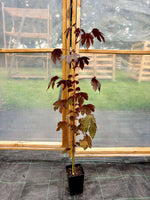
Cranberry Roselle / Blood Hibiscus in Various Sizes
Height:
- 60–90 cm
- 100-130 cm
Common names: Cranberry Roselle, Blood Hibiscus, Cranberry Hibiscus, red-leaved hibiscus, African rosemallow
Scientific name: Hibiscus acetosella
Family: Mallow family
Plant history & use
Cranberry Roselle is a close relative to the better-known roselle Hibiscus sabdariffa, but with better cold tolerance and unique dark red foliage that makes it as beautiful as it is useful. It is grown both as an ornamental plant and for its edible parts – both fruit and leaves have a long tradition in food and drink.
The leaves have a fresh, tart taste reminiscent of cranberries and can be used fresh in salads, as a flavorful splash of color in stir-fries, or lightly cooked like spinach.
The fruits are used in the same way as those of H. sabdariffa to make a delicious cooling juice, but also for jelly and marmalade. They are rich in antioxidants and vitamin C and give an intense color to drinks and desserts.
How to make juice from roselle fruits
Harvest the fruits when they are red and plump. Boil them in a pot with water and add sugar or a natural sweetener, e.g., leaves from 'Sweetleaf'. Let simmer for a few minutes. Strain the juice from the fruits and add freshly squeezed lemon until the desired taste is reached. Chill and serve with ice.
Hardiness & cultivation trials in Sweden
Unlike H. sabdariffa, which is completely frost-sensitive, H. acetosella is right on the edge of being able to be grown outdoors in the country's mildest parts. It belongs to USDA zone 8. Here in Marieholm (zone 1) we have previously succeeded in overwintering other zone 8 plants outdoors, so it is not impossible that Cranberry Roselle can survive in a sheltered spot. We will test this for the first time during the winter of 2025. For those who want to be on the safe side, the plant can be overwintered indoors in a bright and cool space, or in an unheated greenhouse where it is protected from frost. It can also be brought indoors in a pot before winter.
Cultivation
Plant in a sunny to partly shaded location in nutrient-rich, well-drained soil. Regular watering and feeding give strong growth and abundant harvest of leaves and seed pods. To maximize the harvest, start picking leaves early in the summer and let seed pods develop in late summer and autumn. Does not tolerate standing wetness during winter.
Characteristics
Perenniality: Perennial
Growing site: Sun to partial shade
Height: 1–1.5 meters
Growing zone: USDA zone 8 (possibly Sweden’s zone 1 in sheltered location)
Use: Edible leaves, fruits for tea and drink, ornamental plant

30 day returns
- Choosing a selection results in a full page refresh.
- Opens in a new window.