

Nematodes against Garden Borers
465 SEK
Unit price perEstimated delivery to you: 17 October to 24 October.
Beneficial animals to combat garden chafer larvae in the lawn. For outdoor use. Available in packages of 50 million or 250 million.
Orders placed by Sunday evening are shipped the following Tuesday.
Larvae of the garden chafer, Phyllopertha horticola, can cause significant damage to the lawn. However, they can be controlled with the help of nematodes, microscopic roundworms, which are watered over the grass surface. They are sold in packages containing 50 million or 250 million nematodes, enough to treat 50-100 m² or 300-500 m² respectively.
The adult garden chafers are usually seen during May-June, and only for a short period, when they lay their eggs in the grass. A characteristic of the garden chafer is flying low over the grass on sunny mornings. The eggs laid begin to hatch from June onwards. It is the larvae that cause damage to the lawn, as they feed on the grass roots. They grow during the season and overwinter in the soil. The following spring they pupate into a new generation of adult garden chafers.
The garden chafer larva feeds on the grass roots near the surface. The grass becomes dry and yellowish and may start to loosen from the soil surface. The larvae also attract birds and other animals, which can further damage the lawn as they dig around in the grass searching for food.
When the nematodes are watered into the soil, they actively seek a suitable host in the form of a garden chafer larva. They penetrate it and infect it. Bacteria from the nematodes kill the larva. The nematodes reproduce inside the infected larva and then leave it to search for new larvae.
Treatment times
The optimal treatment time is from late July to mid-September. During this period, the larvae are small and close to the surface near the grass roots. Treat about 4 weeks after observing the adult insects to catch the first larvae as the eggs hatch.
Nematodes mainly combat the small, newly hatched larval stages of the garden chafers. Since nematodes also depend on warmth in the soil to work, they are most effective during a shorter period in summer and early autumn.
Instructions for use
The contents of the bag are dissolved in water while stirring, and then watered over the surface. Use the nematode solution immediately after mixing.
Use the nematodes only during the suitable treatment period to achieve an effective result. The treatment is mainly effective against the smaller larval stages of the garden chafer. Optimal soil temperature is above 12 degrees for four weeks after treatment to ensure the nematodes remain active. At lower temperatures, or with larger larval stages, reduced effectiveness can be expected.
Since nematodes live in the water film between soil particles, it is important that the soil is kept moist during treatment. If the treatment area is dry, water it preventively before treatment. Also water after treatment to wash the nematodes properly into the soil. The surface should then be kept moist for at least two weeks after treatment.
Treatment should not be done during heavy rain as it may risk washing away the nematodes.
Nematodes should be watered out early in the morning, in the evening, or on a cloudy day, as they are sensitive to UV light.
Tip!
For easier application, feel free to use a
nematode sprayer!
Subscribe and save 5%!


Nematodes against Garden Borers
465 SEK
Unit price perOrders received before Sunday morning are packed Sunday to Monday.
See our delivery terms.
In stock
Share
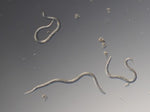
Beneficial animals to combat garden chafer larvae in the lawn. For outdoor use. Available in packages of 50 million or 250 million.
Orders placed by Sunday evening are shipped the following Tuesday.
Larvae of the garden chafer, Phyllopertha horticola, can cause significant damage to the lawn. However, they can be controlled with the help of nematodes, microscopic roundworms, which are watered over the grass surface. They are sold in packages containing 50 million or 250 million nematodes, enough to treat 50-100 m² or 300-500 m² respectively.
The adult garden chafers are usually seen during May-June, and only for a short period, when they lay their eggs in the grass. A characteristic of the garden chafer is flying low over the grass on sunny mornings. The eggs laid begin to hatch from June onwards. It is the larvae that cause damage to the lawn, as they feed on the grass roots. They grow during the season and overwinter in the soil. The following spring they pupate into a new generation of adult garden chafers.
The garden chafer larva feeds on the grass roots near the surface. The grass becomes dry and yellowish and may start to loosen from the soil surface. The larvae also attract birds and other animals, which can further damage the lawn as they dig around in the grass searching for food.
When the nematodes are watered into the soil, they actively seek a suitable host in the form of a garden chafer larva. They penetrate it and infect it. Bacteria from the nematodes kill the larva. The nematodes reproduce inside the infected larva and then leave it to search for new larvae.
Treatment times
The optimal treatment time is from late July to mid-September. During this period, the larvae are small and close to the surface near the grass roots. Treat about 4 weeks after observing the adult insects to catch the first larvae as the eggs hatch.
Nematodes mainly combat the small, newly hatched larval stages of the garden chafers. Since nematodes also depend on warmth in the soil to work, they are most effective during a shorter period in summer and early autumn.
Instructions for use
The contents of the bag are dissolved in water while stirring, and then watered over the surface. Use the nematode solution immediately after mixing.
Use the nematodes only during the suitable treatment period to achieve an effective result. The treatment is mainly effective against the smaller larval stages of the garden chafer. Optimal soil temperature is above 12 degrees for four weeks after treatment to ensure the nematodes remain active. At lower temperatures, or with larger larval stages, reduced effectiveness can be expected.
Since nematodes live in the water film between soil particles, it is important that the soil is kept moist during treatment. If the treatment area is dry, water it preventively before treatment. Also water after treatment to wash the nematodes properly into the soil. The surface should then be kept moist for at least two weeks after treatment.
Treatment should not be done during heavy rain as it may risk washing away the nematodes.
Nematodes should be watered out early in the morning, in the evening, or on a cloudy day, as they are sensitive to UV light.
Tip!
For easier application, feel free to use a
nematode sprayer!

30 day returns
- Choosing a selection results in a full page refresh.
- Opens in a new window.