
Nematodes against sedges
372 SEK
Unit price perEstimated delivery to you: 21 October to 28 October.
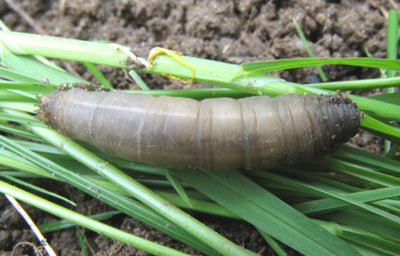
Nematodes to combat crane fly larvae in the lawn. For outdoor use. Available in packages of 50 million or 250 million.
Orders placed by Sunday evening are shipped the following Tuesday.
When facing damage in the lawn caused by crane fly larvae, nematodes are used as a biological control. Nematodes are microscopic roundworms that are watered over the area you wish to treat. They are sold in packages containing 50 million or 250 million nematodes, where the smaller package is enough to treat 50-100 m² and the larger one 300-500 m².
The marsh crane fly, Tipula paludosa, is common in Sweden. The adult insects hatch at the end of July and swarm over the lawn roughly until mid-September. During this period, egg-laying takes place. Each female can lay 300-400 eggs in the grass. The eggs hatch about 14 days after being laid, that is in August-September. The young larvae then crawl down under the grass roots, where they begin to gnaw on fresh root tips. The larvae overwinter in the soil and usually do not cause visible damage until the following spring. Then they grow large, reaching a length of 3-4 cm, and have a great need for food.
The infestation is recognized by the grass dying or not growing properly. By examining the grass roots, one can find frayed gnaw marks. In severe infestations during spring, gnawing can also occur on the blades. Often the damage is also visible because birds have discovered the larvae and systematically start turning up the grass with their beaks to reach and eat them.
When the nematodes are watered into the soil, they actively seek a suitable host in the form of a crane fly larva. They penetrate it and infect it. Bacteria from the nematodes kill the larva. The nematodes reproduce inside the infected larva and then leave it to search for new larvae.
Treatment times
Plan the first treatment about 2-3 weeks after the flight of adult crane flies has been observed over the grass (= egg-laying), this is usually in August/September.
Nematodes mainly combat the small, newly hatched larval stages of the crane flies. Since nematodes also depend on warmth in the soil to work, they are most effective during a short period. This is in the autumn, up to early September.
The following spring, the larvae are often too large for the nematodes to effectively control them. Treatment can also be done in spring when soil temperatures are above 8°C, but a reduced effect should be expected.
Instructions for use
The contents of the bag are dissolved in water while stirring, and then watered over the surface. Use the nematode solution immediately after mixing.
Use nematodes only during the suitable treatment period to achieve an effective result. The treatment is mainly effective against the smaller larval stages of the crane fly. Optimal soil temperature is above 12 degrees for four weeks after treatment to ensure that the nematodes remain active. At lower temperatures, or with larger larval stages, a reduced effect can be expected.
Since nematodes live in the water film between soil particles, it is important that the soil is kept moist during treatment. If the treatment area is dry, water it preventively before treatment. Also water after treatment to wash the nematodes well down into the soil. The surface should then be kept moist for at least two weeks after treatment.
Treatment should not be done during heavy rain as it may risk washing away the nematodes.
Nematodes should be watered out early in the morning, in the evening, or on a cloudy day, as they are sensitive to UV light.
Tip!
For easier application, feel free to use a nematode sprayer!
Subscribe and save 5%!


Nematodes against sedges
372 SEK
Unit price perOrders received before Sunday morning are packed Sunday to Monday.
See our delivery terms.
In stock
Share
Nematodes to combat crane fly larvae in the lawn. For outdoor use. Available in packages of 50 million or 250 million.
Orders placed by Sunday evening are shipped the following Tuesday.
When facing damage in the lawn caused by crane fly larvae, nematodes are used as a biological control. Nematodes are microscopic roundworms that are watered over the area you wish to treat. They are sold in packages containing 50 million or 250 million nematodes, where the smaller package is enough to treat 50-100 m² and the larger one 300-500 m².
The marsh crane fly, Tipula paludosa, is common in Sweden. The adult insects hatch at the end of July and swarm over the lawn roughly until mid-September. During this period, egg-laying takes place. Each female can lay 300-400 eggs in the grass. The eggs hatch about 14 days after being laid, that is in August-September. The young larvae then crawl down under the grass roots, where they begin to gnaw on fresh root tips. The larvae overwinter in the soil and usually do not cause visible damage until the following spring. Then they grow large, reaching a length of 3-4 cm, and have a great need for food.
The infestation is recognized by the grass dying or not growing properly. By examining the grass roots, one can find frayed gnaw marks. In severe infestations during spring, gnawing can also occur on the blades. Often the damage is also visible because birds have discovered the larvae and systematically start turning up the grass with their beaks to reach and eat them.
When the nematodes are watered into the soil, they actively seek a suitable host in the form of a crane fly larva. They penetrate it and infect it. Bacteria from the nematodes kill the larva. The nematodes reproduce inside the infected larva and then leave it to search for new larvae.
Treatment times
Plan the first treatment about 2-3 weeks after the flight of adult crane flies has been observed over the grass (= egg-laying), this is usually in August/September.
Nematodes mainly combat the small, newly hatched larval stages of the crane flies. Since nematodes also depend on warmth in the soil to work, they are most effective during a short period. This is in the autumn, up to early September.
The following spring, the larvae are often too large for the nematodes to effectively control them. Treatment can also be done in spring when soil temperatures are above 8°C, but a reduced effect should be expected.
Instructions for use
The contents of the bag are dissolved in water while stirring, and then watered over the surface. Use the nematode solution immediately after mixing.
Use nematodes only during the suitable treatment period to achieve an effective result. The treatment is mainly effective against the smaller larval stages of the crane fly. Optimal soil temperature is above 12 degrees for four weeks after treatment to ensure that the nematodes remain active. At lower temperatures, or with larger larval stages, a reduced effect can be expected.
Since nematodes live in the water film between soil particles, it is important that the soil is kept moist during treatment. If the treatment area is dry, water it preventively before treatment. Also water after treatment to wash the nematodes well down into the soil. The surface should then be kept moist for at least two weeks after treatment.
Treatment should not be done during heavy rain as it may risk washing away the nematodes.
Nematodes should be watered out early in the morning, in the evening, or on a cloudy day, as they are sensitive to UV light.
Tip!
For easier application, feel free to use a nematode sprayer!

30 day returns
- Choosing a selection results in a full page refresh.
- Opens in a new window.