
Subscribe and save 5%!
Search results
Search results


<p data-mce-fragment="1">SEEDS (30 pcs/bag)</p>
<p data-mce-fragment="1"><strong data-mce-fragment="1">Common names:</strong> Black Goji, Russian Thornberry<strong data-mce-fragment="1"><br data-mce-fragment="1"> Scientific name:</strong><em data-mce-fragment="1"> </em><em data-mce-fragment="1">Lycium ruthenicum </em>Murr.<em data-mce-fragment="1"><br data-mce-fragment="1"> </em><strong data-mce-fragment="1">Family:</strong> Nightshade family</p>
<p data-mce-fragment="1"><strong><span>Plant history & use:</span></strong></p>
<p data-mce-fragment="1">Black Goji, like its relative <a title="Goji berries (Lycium barbarum)" href="https://tradgardsdags.nu/products/gojibar-bocktorne-lycium-chinense" target="_blank" data-mce-href="https://tradgardsdags.nu/products/gojibar-bocktorne-lycium-chinense"><span style="color: #4e991d;" data-mce-style="color: #4e991d;"><strong style="color: #4e991d;" data-mce-style="color: #4e991d;">Goji (<em>Lycium barbarum</em>)</strong></span></a>, is a rich source of proteins and vitamins. The black goji berry is especially rich in anthocyanins, with a higher content than blueberries. The shrub originates from areas around the Tibetan plateau and southern Russia.</p>
<p data-mce-fragment="1">It is a plant that has not yet received much attention in the West, but it has long been used by indigenous peoples in its natural habitat. Surprisingly, indigenous people in small northern Indian communities use the berry to make an ointment to prevent blindness in camels. This is possible thanks to the berry’s high content of <em>lutein</em>.</p>
<p data-mce-fragment="1">The berry gets its deep blue-purple color from the anthocyanins, a substance found in unusually high amounts in the black goji berry. Anthocyanins are the same substance that colors blueberries blue and contribute to many of their healthful properties.</p>
<p data-mce-fragment="1">Ripe berries can be eaten raw, dried, or cooked.</p>
<p data-mce-fragment="1">The most common way to consume black goji berries is to make an infusion from them. This is best done when they are completely fresh, but it can also be done with dried berries. The Black Goji berry releases different colors depending on the type of water used. With mineral-rich water <meta charset="utf-8">(alkaline: pH >7) the color becomes deep dark blue, and in acidic water <meta charset="utf-8">(pH <7) the color becomes intense purple.</p>
<p data-mce-fragment="1"><strong data-mce-fragment="1">Cultivation:</strong></p>
<p data-mce-fragment="1">Black Goji originally grows in very extreme climates where it is exposed to drought, extreme cold, high salt levels, and nutrient-poor soils. These factors have made the black goji berry a very hardy plant. It can grow in temperatures down to -20 ºC.</p>
<p data-mce-fragment="1">It is an easy-to-grow shrub that often yields abundant harvests. It prefers well-drained soils (often sandy soils) and establishes a strong root system which makes it a good soil binder, for example along shorelines. It can also naturally form a dense wall that protects against the worst winds. Thrives in bright locations.</p>
<p data-mce-fragment="1">The shrub grows up to 2 m and can be grown outdoors in open ground in Sweden. To protect your Black Goji shrub from the harshest Swedish conditions, you can cover the base of the plant with straw, leaves, or similar in late summer – this protects the plant from the hardest cold and extends the growing season.</p>
<p data-mce-fragment="1">The numerous berries change from green to black/blue-purple in color. They are only ready for harvest when fully colored. This occurs in summer-autumn.</p>
<p data-mce-fragment="1"><strong data-mce-fragment="1">Sowing:</strong></p>
<p data-mce-fragment="1">Sow the seeds in moist seed soil. Cover with a thin layer of soil. Keep the sowing moist.</p>
<p data-mce-fragment="1"><strong data-mce-fragment="1">Characteristics:</strong></p>
<p data-mce-fragment="1">Lifespan: Perennial<br data-mce-fragment="1"> Light: sun<br data-mce-fragment="1"> Height: 1-2 m<br data-mce-fragment="1"> Germination time: 1-3 weeks<br data-mce-fragment="1"> Hardiness zone: 1-6<br></p>


Orange Goji Berry / Buckthorn 'Princess Tao' Plant 20-40 cm (Lycium barbarum)
16480
Orange Goji Berry / Buckthorn 'Princess Tao' Plant 20-40 cm (Lycium barbarum)
16480
<p data-mce-fragment="1">1st generation Orange Goji: 2 years old - ready to bloom = bear fruit</p>
<meta charset="utf-8">
<p data-mce-fragment="1">Current height 20-40 cm</p>
<p data-mce-fragment="1"><strong data-mce-fragment="1">Common names:</strong> Orange Goji, Orange Goji berry, Orange Thornbush<strong data-mce-fragment="1"><br data-mce-fragment="1">Scientific name:</strong><em data-mce-fragment="1"> Lycium barbarum </em>'Princess Tao'<em data-mce-fragment="1"><br data-mce-fragment="1"></em><strong data-mce-fragment="1">Family:</strong> Solanaceae</p>
<p data-mce-fragment="1"><strong><span>History of cultivation & use:</span></strong></p>
<p data-mce-fragment="1">Orange Goji berry belongs to the same genus as the<span> </span><span style="color: #4e991d;"><a style="color: #4e991d;" title="Goji (Lycium chinense)" href="https://tradgardsdags.nu/products/gojibar-bocktorne-lycium-chinense" target="_blank" rel="noopener noreferrer"><strong>red</strong></a></span><span> </span>and the<span> </span><span style="color: #4e991d;"><a style="color: #4e991d;" title="Black Goji (Lycium ruthenicum)" href="https://tradgardsdags.nu/products/svart-goji-lycium-ruthenicum" target="_blank" rel="noopener noreferrer"><strong>black goji berry</strong></a></span><span> </span>and like its relatives, it is a nourishing berry, especially rich in vitamins and proteins.</p>
<p data-mce-fragment="1">Orange Goji berries can be eaten raw as they are, used in salads, or dried to be added to muesli or baked goods. You can also simply make a drink from them, like black goji berries.</p>
<p data-mce-fragment="1">Both orange, yellow, and black goji berries are still relatively rare in Sweden, so here is a chance to have something distinctive and wholesome in your cultivation!</p>
<p data-mce-fragment="1"><strong data-mce-fragment="1">Cultivation:</strong></p>
<p data-mce-fragment="1">Orange Goji is a hardy shrub that withstands many degrees below zero and is therefore suitable for outdoor cultivation in Sweden, either in pots or in open ground. The shrub grows well in sandy, clay soils, and everything in between, as long as the soil is well-drained. It thrives in sunny locations and is relatively insensitive to drought, wind, and salts.</p>
<p data-mce-fragment="1">The shrub also has a strong root system that binds the soil well. Its tough qualities make it an effective plant in maritime coastal climates with much wind.</p>
<p data-mce-fragment="1">Orange Goji is a grateful plant that does not require much care.</p>
<p data-mce-fragment="1">The shrub grows 1-3 meters tall. Its growth habit makes it suitable to be tied to strings along a wall to grow as a wall cover. Whether it grows against a wall or not, give it something to climb on or grow against so the shrub grows faster.</p>
<p data-mce-fragment="1"><strong data-mce-fragment="1">Characteristics:</strong></p>
<p data-mce-fragment="1">Lifespan: Perennial<br data-mce-fragment="1">Growing position: sun<br data-mce-fragment="1">Height: 1-3 m<br data-mce-fragment="1">Growing zone: 1-6</p>


<p>1st Goji plant: 2 years old - ready to bloom = bear fruit</p>
<p><meta charset="utf-8">Current height 20-40 cm</p>
<p><strong>Common name: </strong>Goji, Boxthorn<br><strong>Scientific name:</strong><span> </span><em>Lycium barbarum<br></em><strong>Family:</strong> <span>Nightshade family</span></p>
<p><strong><span>Plant history & use:</span></strong><br><br>Goji berries are one of the most popular "superfoods" (term for food with especially high nutritional value) and are often used in muesli, smoothies, salads, and bread or simply eaten as they are. The reason for their popularity is likely because the goji berry is one of the most nutrient-dense berries available. It is rich in vitamins and minerals as well as omega-3 and antioxidants. The goji berry also has a particularly high protein content of 10g per 100g, which is very rare among fruits and berries. The taste is sweet with hints of cranberry and cherry. Usually, the berries are dried before use.</p>
<p>The red goji berry is richer in carotenoids than the <span> </span><span style="color: #4e991d;"><strong><a style="color: #4e991d;" title="Black Goji (Lycium ruthenicum)" href="https://tradgardsdags.nu/products/svart-goji-lycium-ruthenicum" target="_blank">black goji berry</a></strong></span>, while the black one is richer in antioxidants.</p>
<p>The root is used in herbal medicine for, among other things, its liver-cleansing properties.</p>
<p>The leaves are used in Asia in stews and soups or made into tea.</p>
<p><strong>Cultivation:</strong></p>
<p>Goji grows wild in Asia and has, since being introduced to Sweden, also begun to spread naturally here. The plant is a deciduous shrub that usually grows 80-200 cm tall.</p>
<p>The plant is very easy to care for and hardy against both salt and wind. It thrives well in both sun and partial shade – goji is an adaptable plant.</p>
<p><strong>Characteristics:</strong></p>
<p>Perennial: Perennial<br>Growing position: sun/partial shade<br>Height: up to 3 meters (often around 2m)<br>Growing zone: 1-4</p>


<p data-mce-fragment="1">SEEDS (30 pcs/bag)</p>
<p data-mce-fragment="1"><strong>Common name: </strong>Goji, Boxthorn<br><strong>Scientific name:</strong><span data-mce-fragment="1"> </span><em data-mce-fragment="1">Lycium barbarum<br></em><strong>Family:</strong> <span data-mce-fragment="1">Nightshade family</span></p>
<p data-mce-fragment="1"><strong data-mce-fragment="1"><span data-mce-fragment="1">Plant history & use:</span></strong><br data-mce-fragment="1"><br data-mce-fragment="1">Goji berries are one of the most popular "superfoods" (a term for food with especially high nutritional value) and are often used in muesli, smoothies, salads, and bread or simply eaten as they are. The reason for their popularity is likely because the goji berry is one of the most nutrient-dense berries available. It is rich in vitamins and minerals as well as omega-3 and antioxidants. The goji berry also has a particularly high protein content of 10g per 100g, which is very unusual among fruits and berries. The taste is sweet with hints of cranberry and cherry. Usually, the berries are dried before use.</p>
<p data-mce-fragment="1">The red goji berry is richer in carotenoids than the <span style="color: #4e991d;"><strong><a href="https://tradgardsdags.nu/products/svart-goji-lycium-ruthenicum" title="Black Goji (Lycium ruthenicum)" style="color: #4e991d;" target="_blank">black goji berry</a></strong></span>, while the black one is richer in antioxidants.</p>
<p data-mce-fragment="1">The root is used in herbal medicine for, among other things, its liver-cleansing properties.</p>
<p data-mce-fragment="1">The leaves are used in Asia in stews and soups or made into tea.</p>
<p data-mce-fragment="1"><strong>Cultivation:</strong></p>
<p data-mce-fragment="1">Goji grows wild in Asia and has, since being introduced to Sweden, also begun to spread naturally here. The plant is a deciduous shrub that usually grows 80-200 cm tall.</p>
<p data-mce-fragment="1">The plant is very easy to care for and hardy against both salt and wind. It thrives well in both sun and partial shade; this is a plant that adapts well!</p>
<p data-mce-fragment="1"><strong>Sowing:</strong></p>
<p data-mce-fragment="1">The seeds are sown indoors from January to March in moist seed soil or outdoors in pots or in open ground from May to September. The optimal germination temperature is around 20-25 <span data-mce-fragment="1">ºC</span>. It can take 3-4 months for the plants to be ready for planting out, so it is recommended to sow early in the year. Then you have good chances to harvest already the same year.</p>
<p data-mce-fragment="1"><strong>Characteristics:</strong></p>
<p data-mce-fragment="1">Lifespan: Perennial<br data-mce-fragment="1">Light conditions: sun/partial shade<br data-mce-fragment="1">Height: up to 3 meters (often around 2m)<br data-mce-fragment="1">Germination time: 10-30 days<br data-mce-fragment="1">Hardiness zone: 1-4<br></p>


<p data-mce-fragment="1">Jiaogulan: current height 20-40 cm<br></p>
<p data-mce-fragment="1"><strong>Common names:</strong><span> Jiaogulan, Gynnostemma, <meta charset="utf-8">Sweet Tea Vine, Southern Ginseng, Miracle Plant, Amachazuru</span><br><strong>Scientific name:</strong><em><span> Gynostemma pentaphyllum</span><br></em><strong>Family:</strong> Cucurbitaceae</p>
<p data-mce-fragment="1"><strong><span data-mce-fragment="1">Plant history & use:</span></strong></p>
<p data-mce-fragment="1">Jiaogulan, also called "the herb of immortality," is one of the lesser-known traditional Chinese herbs. For centuries it was used almost exclusively by the people in a mountainous region in southern China where the herb grows wild. </p>
<p data-mce-fragment="1"><span data-mce-fragment="1"><meta charset="utf-8">Traditional Chinese Medicine (TCM) as we know it today originated in the central part of the country, <meta charset="utf-8">far from this region. For this reason, Jiaogulan is not included in the standardized listings of medicines in TCM and is therefore not used as widely as other Chinese medicinal herbs. </span></p>
<p data-mce-fragment="1"><meta charset="utf-8">In the 1970s, China conducted a thorough census. It was then discovered that the inhabitants of certain regions, mainly Guizhou province, lived longer than average—often more than 100 years. It turned out that the oldest residents had regularly drunk Jiaogulan tea throughout their lives. Partly from this event comes the nickname "the herb of immortality," but also from numerous scientific studies conducted on the mysterious herb.</p>
<p data-mce-fragment="1">Modern recognition of Jiaogulan outside China stems from research into sugar substitutes. When examining the sweetening substance in Jiaogulan, saponins were found that are identical to the saponins found in <span style="color: #4e991d;"><a href="https://tradgardsdags.nu/products/koreansk-ginseng-panax-ginseng" title="Korean Ginseng (Panax ginseng)" style="color: #4e991d;" target="_blank"><strong>Korean Ginseng (<em>Panax ginseng</em>)</strong></a></span>. Further research discovered several additional saponins which were comparable or identical to those found in P. ginseng. The saponins in P. ginseng are called ginsenosides while those found in Jiaogulan are called gypenosides. Compared to Korean Ginseng, Jiaogulan has the advantage of being much easier to cultivate and is ready for harvest much earlier.</p>
<p data-mce-fragment="1"><meta charset="utf-8">Today Jiaogulan is well used in China and is widely consumed by those interested in its reputed rejuvenating properties. </p>
<p data-mce-fragment="1">The leaves taste sweet and are used to make tea. They can also be cooked—for example, in a wok.</p>
<p data-mce-fragment="1">The herb is today used in the treatment of diabetes and a range of other ailments. There is much to read about this herb for the interested.</p>
<p data-mce-fragment="1"><strong>Cultivation:</strong></p>
<p data-mce-fragment="1">Jiaogulan naturally has a widespread range: it stretches all the way from China to Korea and Japan, down to Southeast Asia and even to New Guinea. It is a plant that thrives in a variety of climates. It is a climbing plant that can reach up to 8 meters high. You can either grow it against something it can twine around, or let it creep along low-growing bushes on the ground.</p>
<p data-mce-fragment="1">Jiaogulan should be able to grow in most of Sweden’s zones 1-2, roughly tolerating temperatures down to -10°C. It prefers to grow in a humus-rich, well-drained but moisture-retaining soil (typical humus character)—potting soil works well. Place it in a sunny spot.</p>
<p data-mce-fragment="1">Plant in a pot and overwinter in a greenhouse the first year to give the plant somewhat milder conditions. You can also overwinter it in a storage room, cellar, etc., if there is enough light. If the plant survives the first year with protected overwintering, you can try planting it out in the ground the next spring to give it a chance to overwinter without protection the coming winter. You can always set up wind protection made of fleece and stakes around the plant and cover the base with straw to create milder conditions when growing directly outdoors.</p>
<p data-mce-fragment="1">Alternatively, move the plant indoors during winter and place it outside during the summer months. If your plant has grown well after the summer, prune and make tea from the leaves to adapt it to its new indoor growing space. With this method, it is possible to grow Jiaogulan throughout Sweden.</p>
<p data-mce-fragment="1">Suitable to grow as ground cover in favorable climates.</p>
<p data-mce-fragment="1"><strong>Characteristics:</strong></p>
<p data-mce-fragment="1">Lifespan: Perennial<br data-mce-fragment="1">Growing position: sun<br data-mce-fragment="1">Height: up to 8 meters<br>Growing zone: 1-2</p>


<p data-mce-fragment="1">SEEDS (30 pcs/bag)</p>
<p data-mce-fragment="1"><strong data-mce-fragment="1">Common names: </strong><span data-mce-fragment="1">Gotu Kola, Indian Pennywort, Brahmi herb, and others… <br data-mce-fragment="1"><strong data-mce-fragment="1">Scientific name:</strong><em data-mce-fragment="1"> </em><em data-mce-fragment="1">Centella asiatica </em>/<em data-mce-fragment="1"> Hydrocotyl asiatica<br data-mce-fragment="1"></em><strong data-mce-fragment="1">Family:</strong> Apiaceae</span></p>
<p data-mce-fragment="1"><strong><span>Plant history & use:</span></strong></p>
<p data-mce-fragment="1">Gotu Kola is a well-known medicinal plant originating from Asia. It has long been used to ease, among other things, stress and anxiety. It is also commonly used against skin ailments such as eczema, wounds, and acne as it improves the skin’s elasticity. Gotu Kola is an adaptogen and, like <a title="Ashwagandha seeds" href="https://tradgardsdags.nu/collections/froavdelning/products/ashwagandha-indisk-ginseng-withania-somnifera" target="_blank"><strong><span style="color: #4e991d;">Ashwagandha </span></strong></a>, it is one of the few plants with a very broad range of uses in traditional medicine. There are many scientific articles available for those interested in learning more in depth.</p>
<p data-mce-fragment="1">For purely medicinal purposes, extracts are made from the plant. But its health-promoting properties can also be used in food and drink.</p>
<p data-mce-fragment="1">For example, in Burma, a salad is often made with “Pennywort” as the base together with tomato, onion, peanuts, and more. The leaves are also brewed into tea or made into a cooling drink by pressing the fresh leaves.</p>
<p data-mce-fragment="1"><span style="text-decoration: underline;">There are two different varieties of Gotu Kola:</span> <br></p>
<p data-mce-fragment="1">One has whole, round leaves and is better suited to grow directly in water – but it also grows well in soil. This type spreads horizontally with the help of underground (or underwater) rhizomes that are somewhat thicker than the leaf stalk.</p>
<p data-mce-fragment="1">The other variety has a small gap in its leaf shape right where the leaf stalk meets the leaf – this variety spreads with the help of long, narrow above-ground runners similar to strawberries. Judging by its similar growth habit, it is easy to understand that Gotu Kola is also a good ground cover.</p>
<p data-mce-fragment="1">Both varieties contain the same active substances, but it is the latter variety that is most often used in the production of dietary supplements and so on. As seen in the pictures, our seeds come from the latter variety.</p>
<p data-mce-fragment="1"><strong data-mce-fragment="1">Cultivation:</strong></p>
<p data-mce-fragment="1">In its natural environment, Gotu Kola is often found growing in water, in moist soils, and along roadsides and hedgerows.</p>
<p data-mce-fragment="1">It is an easy-to-grow and hardy plant that thrives best in moisture-retaining soil in partly shaded locations. It is advantageous to let it grow in loose soil with plenty of organic material as it requires moisture-retaining properties while excess water easily drains off or down into a tray. Gotu Kola can also grow in drier soils.</p>
<p data-mce-fragment="1">The Gotu Kola plant spreads quickly, so if grown in a pot, a wide pot is preferable.</p>
<p data-mce-fragment="1">This plant usually does not grow taller than 30 cm but tends to spread horizontally up to about 1 meter.</p>
<p> </p>
<p data-mce-fragment="1">For this reason, it is an effective ground cover in mixed planting with other crops.</p>
<p data-mce-fragment="1"><strong data-mce-fragment="1">Sowing:</strong></p>
<p data-mce-fragment="1"><span data-mce-fragment="1">Place seeds</span><span data-mce-fragment="1"> </span><span data-mce-fragment="1">in an airtight plastic bag with moist sand/peat/seed soil in the fridge for 3 weeks. </span><span data-mce-fragment="1">Then sow</span><span data-mce-fragment="1"> in moist seed soil. Cover with a thin layer of soil. Keep the sowing moist.</span></p>
<p data-mce-fragment="1"><strong data-mce-fragment="1">Characteristics:</strong></p>
<p data-mce-fragment="1">Lifespan: Perennial<br data-mce-fragment="1">Light: partial shade/sun<br data-mce-fragment="1">Height: 30 cm (width 1 m)<br data-mce-fragment="1">Germination time: 2-8 weeks<br>USDA zone 7-10<br data-mce-fragment="1">Plant zone: approximate translation 1-3</p>


<p><strong>Korogi: current height 20–40 cm</strong><br><br><strong>Common name:</strong> Korogi, Chinese earth artichoke<br><strong>Scientific name:</strong> <em>Stachys affinis</em><br><strong>Family:</strong> Lamiaceae</p>
<h4>Plant history & use</h4>
<p>Korogi is a perennial root vegetable originating from China and Japan, where it has long been cultivated for its plump, white tubers that are crisp, mild, and very useful in cooking. It is sometimes called <em>Chinese artichoke</em> in English, but it is not related to either the Jerusalem artichoke or the globe artichoke.</p>
<p>The edible tubers are harvested late in autumn or early spring and can be eaten raw, boiled, fried, or even <meta charset="utf-8">pickled. The texture resembles water chestnut and the taste is mild, nutty, and sweet. In Japan, they are often served pickled as a side dish, while in China they are used in stews and stir-fries. They are also rich in carbohydrates and are considered to have strengthening properties in traditional Chinese herbal medicine.</p>
<h4>Cultivation</h4>
<p>Korogi thrives in sun to partial shade in moisture-retentive but well-drained soil. It spreads underground through its tubers. It grows best in raised beds or pots if you want to control its spread.</p>
<p>The soil should be kept evenly moist during the growing season. Dryness should be avoided. Harvest after the first frost nights when the flavor improves. It is good to leave some tubers in the ground for regrowth next season.</p>
<h4>Characteristics</h4>
<p><strong>Perenniality:</strong> Perennial<br><strong>Light conditions:</strong> Sun to partial shade<br><strong>Height:</strong> 30–50 cm<br><strong>Growing zone:</strong> 1–4<br></p>
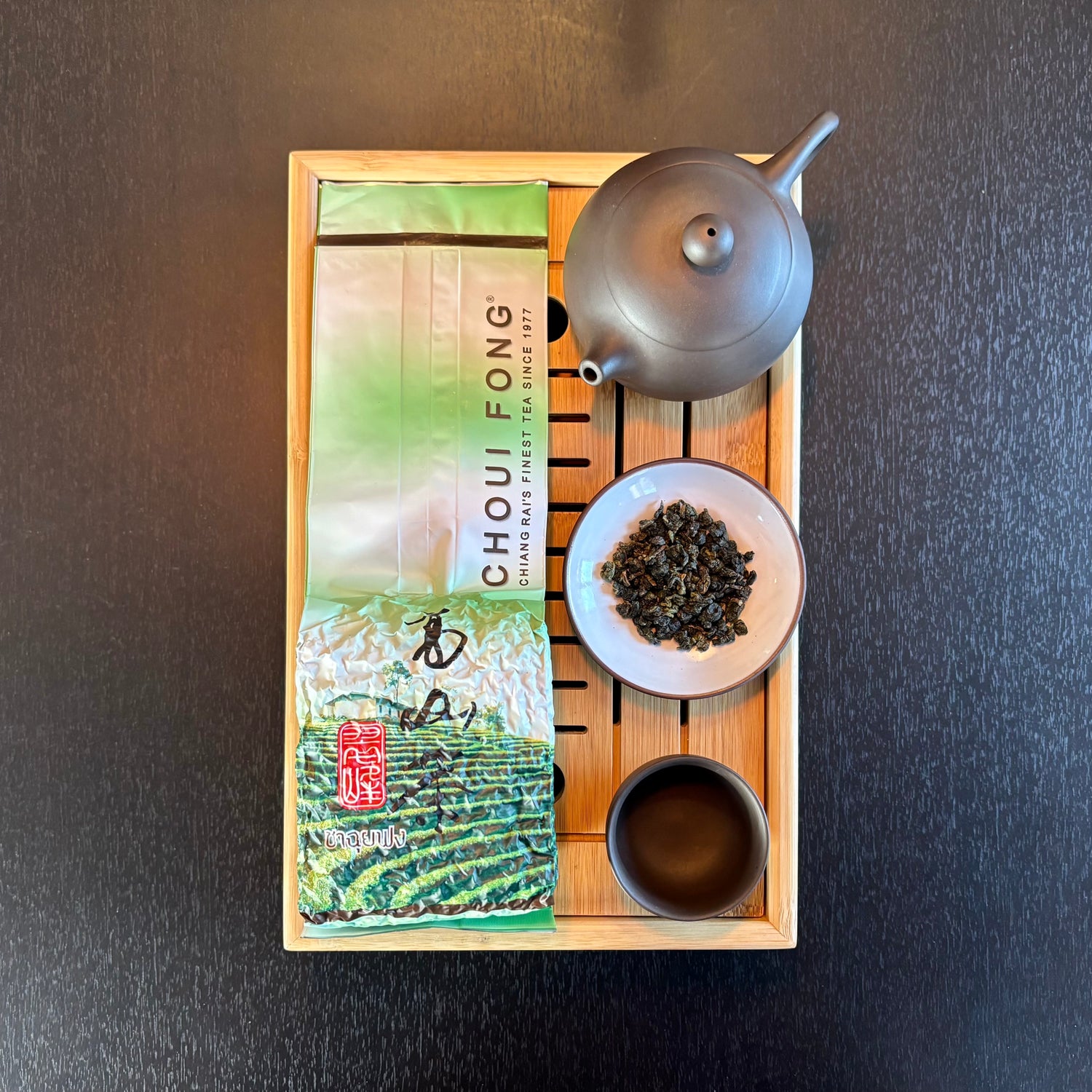

Ruan Zhi Oolong Tea (Oolong No. 17) | Exclusively delicate tea from the mountains of northern Thailand
13200
From 132 SEK
Unit price perRuan Zhi Oolong Tea (Oolong No. 17) | Exclusively delicate tea from the mountains of northern Thailand
13200
From 132 SEK
Unit price per
<h4>
<meta charset="utf-8"> <strong><span>Origin:</span></strong>
</h4>
<p>This Oolong tea comes from the beautiful mountainous landscapes in northern Thailand. The type of tea bush used for these teas is imported from a tea research center in Taiwan and is called Ruan Zhi (also Oolong No. 17) - which means "soft stem." These tea bushes and the classic Taiwanese method of preparing the tea leaves give a wonderfully full, round, floral, and sweet taste. It has become a favorite among many tea drinkers in the region.</p>
<p>Ironically, the Ruan Zhi variety is hardly found in Taiwan but has become a popular variety among the few producers in the mountainous areas of northern Thailand, making the tea specific to its region. The reason for this is that the tea research center was one of Thailand's so-called <em>Royal Projects,</em> a series of various development projects carried out by Thailand's King Rama IX with the goal of preserving the nation's nature and supporting the mountain people's agriculture. Today, more than five mountain regions in the country are engaged in growing and producing high-quality tea.</p>
<h4>
<meta charset="utf-8"> <strong><span>Distinctive qualities:</span></strong>
</h4>
<p>The Ruan Zhi tea bush (Oolong No. 17) is, as mentioned, found only in the northern Thailand region. The tea produced from the Ruan Zhi bushes is unusually round and full-bodied in flavor with a pleasant floral sweetness. It is a favorite for those who know it. The producer of this particular tea is called Choui Fong and is a top producer in the area. Thanks to the good growth conditions, they have established majestic plantations with several exclusive cafés where you can visit and try all sorts of products made from the tea bush: tea leaf salad - made from both fermented and fresh tea leaves (really tasty), cheesecake made with green tea, classic Chinese <em>steamed buns</em> flavored with tea, as well as the opportunity to taste all their different teas; oolong 12 & 17, jasmine tea, oolong with osmanthus, among others.</p>
<p>This producer's expertise in classic Taiwanese tea production combined with their special tea bush with an extra soft stem results in a truly refreshing and delicate tea with a sweetness and complexity in flavor that is hard to find elsewhere.</p>
<h4>
<meta charset="utf-8"> <strong><span>Flavor profile:</span></strong>
</h4>
<p>A soft and round oolong tea with a floral sweetness that becomes more and more distinct with each brewing. It almost completely lacks bitterness compared to <span style="color: rgb(78, 153, 29);"><a rel="noopener" title="400 Year Old Organic Tea | Green Pu'erh Tea from the Phu Noi people's 400-year-old tea plantation" href="https://tradgardsdags.nu/collections/teer/products/400-year-organic-ban-komaen-tea-gront-puerh-te-fran-phou-noi-folkets-400-ar-gamla-teplantage" style="color: rgb(78, 153, 29);" target="_blank"><strong>400 Year Old Organic Tea</strong></a></span> and <strong><a rel="noopener" title="Seohopene Ancient | Green Pu'erh Tea from the Yao people's 20 m wild tea trees" href="https://tradgardsdags.nu/collections/teer/products/gront-puerh-te" target="_blank"><span style="color: rgb(78, 153, 29);">Seohopene Ancient</span></a> </strong>which are so-called Pu'er teas, but also compared to other oolong teas which are often more bitter than this Ruan Zhi Oolong No. 17.</p>
<p>Light amber-colored brew.</p>
<h4>
<meta charset="utf-8"> <strong><span>How to brew the tea:</span></strong>
</h4>
<p><meta charset="utf-8">Since Oolong can steep a little longer than, for example, Pu'er without becoming too bitter, for convenience you can brew Oolong in a half-liter teapot. It will still allow a couple of brews but significantly fewer than if you brew in a small gaiwan which usually holds a maximum of 2 dl.</p>
<p>If you want a truly engaging <em>session</em>, however, it is recommended to use a smaller teapot/gaiwan and make many short brews to experience the development of the tea's full flavor profile more thoroughly.</p>
<p>Here is how to brew Oolong tea to bring out its rich and complex flavors:</p>
<ol>
<li>
<p><strong>Measure the tea</strong>: <meta charset="utf-8">If brewing in a smaller teapot/gaiwan of 150–200 ml, measure about 1 tablespoon of Oolong tea.<br></p>
</li>
<li>
<p>For a half-liter teapot, add about 1.5 tablespoons of Oolong tea.<br></p>
</li>
<li>
<p><strong>Rinse the tea</strong>: Pour hot water (95°C) over the tea leaves and immediately pour out the water. This "rinses" the tea and awakens the leaves by starting to open them.<br><br>When brewing in a half-liter pot, you can possibly skip this step.</p>
</li>
<li>
<p><strong>Brewing</strong>: Add 95<meta charset="utf-8">°C water again and let steep for 30–60 seconds for the first brew. For subsequent brews, you can gradually extend the steeping time (10–20 seconds each time). <br><br>If brewing in a half-liter pot, you can let the leaves steep longer - until you have drunk up, or you can pour the brew into another pot after your chosen steeping time to end the brewing.</p>
</li>
<li>
<p><strong>Serve and enjoy</strong>: Pour the tea into a cup and enjoy its balanced flavor. Oolong tea can be brewed several times, and each brew reveals new nuances.<br><br><meta charset="utf-8">Sitting down and brewing tea in a classic East Asian manner can be a good moment in everyday life to relax. Through a calm session where you focus solely on your senses and the experience itself, you can give yourself an exciting but soothing rest that can otherwise be hard to "justify" in daily life.</p>
</li>
</ol>
<p>Tip: When brewing in a half-liter pot, use a larger strainer where the tea leaves are allowed to unfold - this way the teapot stays easier to clean as it is free from loose leaves that can otherwise be difficult to remove due to the teapot's design.<meta charset="utf-8"></p>
<p> </p>
<p>Ingredients: Oolong tea</p>


Seohopene Ancient | Green Pu'erh Tea from the Yao people's 20m wild tea tree
26000
From 260 SEK
Unit price perSeohopene Ancient | Green Pu'erh Tea from the Yao people's 20m wild tea tree
26000
From 260 SEK
Unit price per
<p>Exclusive tea from ancient 20-meter tall, wild tea trees in the mountainous regions of northern Laos. The tea is highly praised internationally due to its unique nutritional profile and origin: <strong>357 grams of the same quality from the same region normally sells for 140 USD outside Sweden. Our price: </strong><strong>845 SEK. The reason for our lower pricing is that the main purpose is primarily to introduce the traditional Asian tea culture to Sweden/Scandinavia. </strong><strong>In addition, we also offer an <meta charset="utf-8">introductory discount on the smallest size so that everyone can try it at the same price per gram as if they bought a larger one.</strong> Since we in Sweden are not accustomed to this type of tea, the threshold would have been quite high if the teas were sold at the normal price: 140 USD. This is emphasized only so that the tea’s quality is not misjudged based on the price compared to other teas on the international market.</p>
<p>Another noteworthy point is that this grower has a very narrow market—largely due to the low development in the country and inability to speak English; they speak Laotian and Yao, a language very similar to Chinese. They are therefore more or less forced to sell at the price set by the Chinese traders. Their teas have only reached the European market to a very limited extent. I want to help this grower broaden their market and gain the market freedom and recognition that the class of their teas deserves.</p>
<p><meta charset="utf-8">This tea has been found through our own research and contact with the local population.</p>
<h4><strong><span>Origin:</span></strong></h4>
<p>This tea comes from a village up in northern Laos near the border with China. The people living in the village belong to the traditional Yao people, a mountain population who have inhabited the mountain regions in the area for over a thousand years and ethnically descend from southern China. The spoken Yao language is very similar to Chinese.</p>
<p>The village where this group of Yao live is called Seohopene and lies in a river valley between two mountain ridges, a one-hour drive along the nature-surrounded river from the nearest "town".</p>
<p>In the areas around this village grow ancient tea trees, which are several hundred years old and up to 20 meters tall. These tea trees and their ancestors have grown here for thousands of years, as northern Laos is part of the region where the tea bush—or tea tree—Camellia sinensis originates. The proximity to these tea trees combined with the Yao people’s nature-close lifestyle means that the growing tea industry essentially supports the entire village.</p>
<h4><strong><span>Distinctive features:</span></strong></h4>
<p><span>The special thing about these tea cakes is that they are made only from leaves of large tea trees, which can be up to 20 meters tall—the exact age is unknown. What distinguishes tea made from large tea trees is that their well-established roots have access to a broader nutritional profile than cultivated tea, which means that the leaves we brew tea from have a more diverse nutritional content. For the same reason, these tea trees also develop a flavor profile unique to each tree. Thanks to the richer nutritional content, these teas can be brewed several times before they lose their flavor.</span></p>
<p><span>It is also important that teas from the wild are free from pesticides.</span></p>
<p><span>These teas are produced in the classic Yunnan manner: heated in a large fire-heated wok after a short aging process and then pressed into compact so-called <em>tea cakes.</em> This type of tea is called Pu'erh and, thanks to its post-harvest process, has the ability to develop more sought-after qualities the longer it ages. Like aged wines, the flavor profile often develops with age toward a softer, more defined character.</span></p>
<h4><strong><span>Flavor profile:</span></strong></h4>
<p>This tea has some fruity notes—such as dried apricot and recently fallen plums (as they still smell sweet and are edible). Surrounded by a light smoky background like most classic green Pu'erh teas. Quite bitter during the first brews partly due to its broad nutritional profile, which diminishes with subsequent brews. After a few brews, a subtle <em>Hui Gan</em> emerges—it is a so-called <em>returning sweetness</em> that usually settles in the palate and often gives a sweet taste of freshly picked tea. A guideline is: the more bitter the tea, the more Hui Gan. (For a tea with more Hui Gan but less fruitiness, see <span style="color: rgb(78, 153, 29);"><a style="color: rgb(78, 153, 29);" title="400 Year Old Organic Tea | Green Pu'erh Tea from the Phu Noi people's 400-year-old tea plantation" href="https://tradgardsdags.nu/products/400-year-organic-ban-komaen-tea-gront-puerh-te-fran-phou-noi-folkets-400-ar-gamla-teplantage"><strong>400 Year Old Organic Tea</strong></a></span>) Seohopen Ancient often withstands up to 10 brews before it loses fullness.</p>
<p>It is worth noting that this is a <strong>green Pu'erh tea (Sheng)</strong> with a <strong>fresher taste</strong> and <strong>clearer color</strong> than the brownish Pu'erh teas (Shou) which have undergone a more intense fermentation process and developed a rich, earthy flavor profile.</p>
<h4><strong><span>How to brew the tea:</span></strong></h4>
<p>Brewing Pu'erh tea is exciting and requires a few steps to bring out the best flavor. It can be useful to think of tea brewing as an extraction process—where different substances are extracted from the leaves at different temperatures, methods, and brewing times.</p>
<p>Here is how you do it:<strong></strong></p>
<ol>
<li>
<p><strong>Prepare the tea</strong>: Gently break off leaves from the tea cake with a small pointed kitchen knife, or alternatively a proper Pu'erh knife. Measure about 1 tablespoon of Pu'erh tea for a small pot or gaiwan (150–200 ml), or adjust the amount according to your taste.</p>
</li>
<li>
<p><strong>Rinse the tea</strong>: Pour hot water (about 95°C) over the tea and pour away the water after 20 seconds. This step cleans the tea and "awakens" the leaves. If you have a tea set, you can pour this liquid from your gaiwan into your teapot and then into your cup to warm the set before pouring it out.</p>
</li>
<li>
<p><strong>Brewing</strong>: The brewing time given is specific for, among others, Seohopen Ancient which comes from ancient tea trees and is therefore very potent = suitable for shorter brewing times.<br><br>Pour 95°C water over the tea leaves again and let steep for 5 seconds for the first brew—it is enough to draw out the flavor from this tea. Continue with 5-second brewing times for subsequent brews until you feel the flavor starts to fade, then you can increase to 10, 15, 30 seconds or longer. Over 1 minute is not recommended. Longer times give a more intense flavor. But having a long brewing time during the first brews can give a very bitter brew, which is not always desired. It is more enjoyable to do shorter brews and feel the flavors develop with each brew.</p>
</li>
<li>
<p><strong>Pour and enjoy</strong>: Pour the tea into a cup and enjoy. Pu'erh can be brewed several times, and the flavor develops with each brew.<br><br>Sitting down and brewing tea in a classic East Asian way can be a good moment in everyday life to relax. Through a calm session where you focus only on your senses and the experience itself, you can give yourself an exciting but soothing relaxation that can otherwise be hard to "justify" in daily life.</p>
</li>
</ol>
<p>Tip: Feel free to use a gaiwan or a classic small teapot to maximize the flavor and experience. <meta charset="utf-8"></p>
<p> </p>
<p>Ingredients: Pu'erh tea</p>


<p data-mce-fragment="1">SEEDS (10 pcs/bag)</p>
<p data-mce-fragment="1"><strong data-mce-fragment="1">Common names: </strong>Chinese Licorice Root, <meta charset="utf-8"><span data-mce-fragment="1">Gan Cao, <meta charset="utf-8">Manchurian Licorice, Mongolian Licorice</span><strong data-mce-fragment="1"><br data-mce-fragment="1">Scientific name:</strong><em data-mce-fragment="1"> </em><em data-mce-fragment="1">Glycyrrhiza uralensis </em>(syn. <i data-mce-fragment="1">G. glandulifera)</i><em data-mce-fragment="1"><br data-mce-fragment="1"></em><strong data-mce-fragment="1">Family:</strong> Fabaceae</p>
<p data-mce-fragment="1"><strong data-mce-fragment="1"><span data-mce-fragment="1">Growth history & use:</span></strong></p>
<p data-mce-fragment="1"><meta charset="utf-8"><span>Characteristic of</span><span> Chinese Licorice Root </span><span>is</span><em data-mce-fragment="1">:</em></p>
<ul>
<li>
<meta charset="utf-8">Originally from Central Asia and northern China.</li>
<li>Used in traditional Chinese medicine for its healing properties.</li>
<li>Hardy down to -25 ºC.</li>
<li>Can be grown outdoors in colder climates with suitable winter protection.</li>
<li>Grows to a height of 0.5-1.5 meters. This is a more low-growing licorice species.</li>
</ul>
<p data-mce-fragment="1">Licorice root has a long history both as a medicinal plant and as a sweet treat. Already in 4000 BC it was used by the Assyrians and since then licorice root has been used for, among other things, calming nerves, relieving colds, and fighting other viral infections. Licorice root was sold at pharmacies as medicine as late as the 1970s.<br></p>
<p data-mce-fragment="1"><meta charset="utf-8">One of the most prominent uses of licorice root by our ancestors was chewing the root to keep teeth clean and healthy. This was done because the <meta charset="utf-8"><span data-mce-fragment="1">substance <em>glycyrrhizin</em></span> found in the roots <span data-mce-fragment="1">has</span> antibacterial properties. It is also the substance that gives the sweet taste. Glycyrrhizin is not metabolized in our bodies and can therefore, just like <span style="color: #4e991d;"><strong><a style="color: #4e991d;" title="Stevia (Stevia rebaudiana)" href="https://tradgardsdags.nu/products/stevia-sotflockel-stevia-rebaudiana" target="_blank">Stevia (<em>Stevia rebaudiana</em>)</a></strong></span>, be used as a blood sugar-friendly substitute for sugar.</p>
<p data-mce-fragment="1">The root can be shredded and made into tea. You can also make <span data-mce-fragment="1">a refreshing drink served with ice. <meta charset="utf-8">In Mongolia, the leaves of licorice root are used as a substitute for regular <a href="https://tradgardsdags.nu/products/te-camellia-sinensis" title="Tea (Camellia sinensis)" target="_blank"><span style="color: #4e991d;"><strong>Tea (<em>Camellia sinensis</em>)</strong></span></a>.</span></p>
<p data-mce-fragment="1"><span data-mce-fragment="1">The root can also be ground/crushed to boil your own licorice. Mix with sugar/syrup, flour, and anise in a pot and bring to a boil.</span></p>
<p data-mce-fragment="1">Licorice root is also often used together with anise to flavor alcoholic beverages.</p>
<p data-mce-fragment="1"><strong data-mce-fragment="1">Cultivation:</strong></p>
<p data-mce-fragment="1">Licorice root grows naturally in southern Europe and parts of Asia.</p>
<p data-mce-fragment="1">Chinese Licorice Root is hardy down to -25 ºC. In most parts of Sweden it can be grown outdoors year-round. To protect the plant during winter, cover the base with twigs, leaves, straw, or similar. By winter covering your plant, it is possible to create a place where it thrives even if your growing region lies outside its stated growing zone.</p>
<p data-mce-fragment="1"><meta charset="utf-8">Licorice root can also be grown in a wide pot, placed outdoors during the warmer months and indoors during the colder months.</p>
<p data-mce-fragment="1">In Sweden it can be grown both in pots and in open ground but in the latter case must be winter covered with e.g. twigs, leaves, or straw.</p>
<p data-mce-fragment="1">The roots, which are the part used for consumption, grow to meter lengths so a large pot is recommended for pot cultivation. It takes about 3 years for licorice root to be ready for harvest and during that time it grows into a fairly large bush.</p>
<p data-mce-fragment="1">Licorice root thrives best in well-drained soil and locations with full sun.</p>
<p data-mce-fragment="1"><strong data-mce-fragment="1">Sowing:</strong></p>
<p data-mce-fragment="1">The seeds can be sown outdoors <meta charset="utf-8">directly in open ground when the soil temperature is above 15 ºC. You can also start seedlings indoors throughout the year. Place in a bright window.<br></p>
<p data-mce-fragment="1"><meta charset="utf-8">Soak the seeds for 1 day before sowing. Cover the seeds with a thin layer of soil and keep the sowing moist.</p>
<p data-mce-fragment="1"><strong data-mce-fragment="1">Characteristics:</strong></p>
<p data-mce-fragment="1">Lifespan: Perennial<br data-mce-fragment="1">Growing site: sun<br data-mce-fragment="1">Height: 0.5-1.5 m<br data-mce-fragment="1">Germination time: 1-3 months<br data-mce-fragment="1">Growing zone: 1-4<br></p>
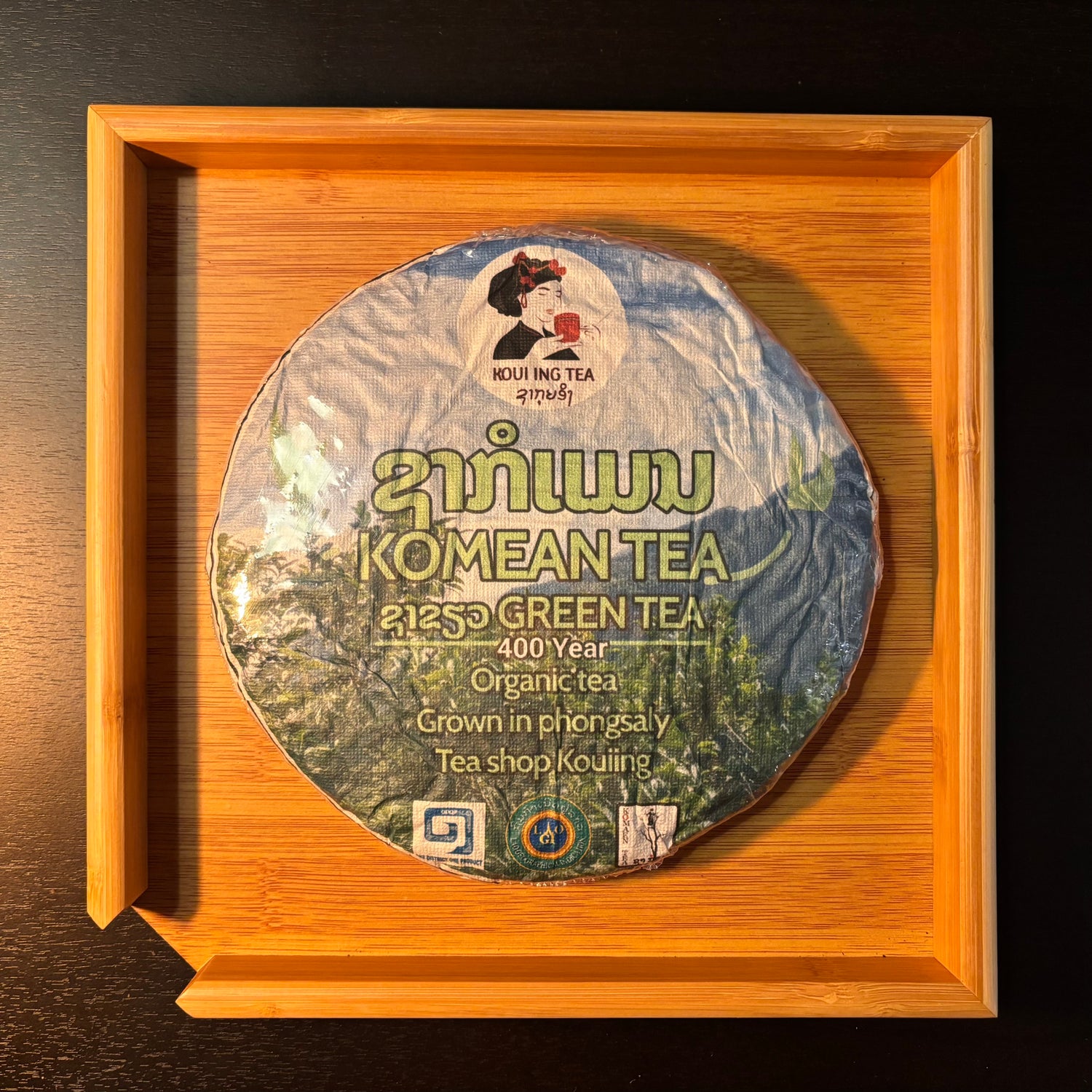

400 Year Old Organic Tea | Green Pu'erh Tea from the Phu Noi people's 400-year-old tea plantation
26000
From 260 SEK
Unit price per400 Year Old Organic Tea | Green Pu'erh Tea from the Phu Noi people's 400-year-old tea plantation
26000
From 260 SEK
Unit price per
<p>Exclusive tea from a 400-year-old tea plantation in the mountains of northern Laos. The tea is highly praised internationally due to its unique nutritional profile and origin: <meta charset="utf-8"><strong>357 grams of the same quality from the same region normally sells for 140 USD outside Sweden. Our price: <meta charset="utf-8">845 SEK. The reason for our lower pricing is that the main purpose is primarily to introduce the traditional Asian tea culture to Sweden/Scandinavia. In addition, we also have an <meta charset="utf-8">introductory discount on the smallest size so that everyone can try it at the same price per gram as if they had bought a larger one.</strong> Since we in Sweden are not accustomed to this type of teas, the threshold would have been quite high if the teas were sold at the normal price: 140 USD. This is emphasized only so that the tea's quality <meta charset="utf-8">is not misjudged based on the price compared to other teas on the international market.</p>
<p>Another noteworthy point is that this grower has a very narrow market, mainly due to the country's low development. The growers only speak Laotian and Phunoi, a Tibeto-Burman language, but thanks to a local representative who also speaks English, they are beginning to have better conditions to communicate with the Western market. The process is, however, not far advanced and they are currently working hard to find a foothold in the European market. Therefore, like the growers of <a href="https://tradgardsdags.nu/products/seohopene-ancient-gront-puerh-te" title="Seohopene Ancient | Green Pu'erh Tea from the Yao people's 20 m wild tea trees"><strong><em><span style="color: rgb(78, 153, 29);">Seohopene Ancient</span></em></strong></a>, they have a limited ability to sell for fair prices to the Chinese traders. I therefore want to help both these growers to broaden their market, as well as to gain the market freedom and recognition that the class of their teas deserves.</p>
<p><meta charset="utf-8">This tea has been found through our own research and contact with the local population.</p>
<h4>
<meta charset="utf-8"> <strong><span>Origin:</span></strong>
</h4>
<p>This tea comes from the legendary 400-year-old tea plantation in the village Ban Komean in Phongsali province - a region known for its green teas, ancient tea trees, and ethnically diverse population. Phongsali is the northernmost province in Laos - bordering China & Vietnam, where most communities are located at high altitudes up in the mountains. It is also the province with the greatest variety of different ethnic groups; one village may be inhabited by ethnic Hmong and a few kilometers further along the road it is instead the Phu Noi who live there, each with their own traditions and lifestyles. In many ways, their cultures meet and are united by the same values, while they differ greatly in other respects.</p>
<p>Amid the tea-covered mountain slopes lies the Phu Noi-inhabited village Ban Komean. The village has become a prime example of how the tea industry can become a cornerstone for the operation of an entire community. In and around the densely built, hilly village lie both tea production buildings and shops. The atmosphere feels energetic while the lifestyle is simple. The Phu Noi people have truly made their mark on the region, among other things with their handmade shoulder bags in the distinctive colors of red and black for the ethnic group, which almost everyone in the area carries with them on their errands regardless of ethnicity.</p>
<p><meta charset="utf-8">These 400-year-old tea trees are said to be some of the oldest in the world and their teas have become popular in China in recent years.</p>
<h4>
<meta charset="utf-8"> <strong><span>Distinguishing features:</span></strong>
</h4>
<p><span>The special thing about these tea cakes is that they are made only from leaves of ancient tea trees, around 400 years old. Like tea made from wild, large tea trees, the teas from this ancient plantation have a richer nutritional profile thanks to the trees' well-established roots. The roots reach deeper and access a greater variety of nutrients which then pass into the leaves. The flavor profile of the teas is influenced by the trees' unique set of nutrients, which is why tea made from these ancient tea trees can vary more in taste than teas made from younger, more uniform tea plantations - this is neither an argument for nor against, only a distinction in difference.</span></p>
<p><span>Thanks to the richer nutritional content from these ancient teas, the teas can be brewed several times before they lose their flavor.</span></p>
<p><span>In this ancient tea plantation, no chemical fertilizers or pesticides are used.</span></p>
<p><span><meta charset="utf-8">The teas are produced in the classic Yunnan manner: heated in a large fire-heated wok after a short aging process and then pressed into compact so-called <em>tea cakes.</em> This type of tea is called Pu'erh and, thanks to its post-harvest process, has the ability to develop more sought-after qualities the longer it is allowed to age. Like aged wines, the flavor profile often develops with age towards a softer, more defined character.</span></p>
<h4>
<meta charset="utf-8"> <strong><span>Flavor profile:</span></strong>
</h4>
<p>This tea has a clear <em>Hui Gan</em> - a so-called <em>returning sweetness</em> that usually settles in the palate and often gives a sweet taste of freshly picked tea. It emerges only after a few brews. In China, they say: after bitterness comes sweetness. In other words, this tea also has a sharper bitterness that gives the experience of a very <em>potent</em> tea. The tea's broad nutritional profile partly contributes to the increased bitterness. The bitterness diminishes with the brews and then the sweetness - Hui Gan - appears instead. Surrounded by a light smokiness typical of most green Pu'erh teas. A refreshing taste and invigorating drinking experience. This tea often withstands up to 15 brews without losing fullness - potent seems to be a guiding word for this tea.</p>
<p><meta charset="utf-8">It is worth noting that this is a <strong>green Pu'erh tea (Sheng)</strong> with a <strong>fresher taste</strong> and <strong>clearer color</strong> than the brown-colored Pu'erh teas (Shou) which have undergone a more intense fermentation process and developed a rich, earthy flavor profile.</p>
<h4>
<meta charset="utf-8"> <strong><span>How to brew the tea:</span></strong>
</h4>
<p>Brewing Pu'erh tea is exciting and requires a few steps to bring out the best flavor. It can be useful to think of tea brewing as an extraction process - where different substances are extracted from the leaves at different temperatures, methods, and brewing times.</p>
<p>Here is how you do it:<strong></strong></p>
<ol>
<li>
<p><strong>Prepare the tea</strong>: Gently break off the leaves from the tea cake with a small pointed kitchen knife, or alternatively a proper Pu'erh knife. Measure about 1 tablespoon of Pu'erh tea for a small pot or gaiwan (150–200 ml), or adjust the amount according to your taste.</p>
</li>
<li>
<p><strong>Rinse the tea</strong>: Pour hot water (about 95°C) over the tea and pour away the water after 20 seconds. This step cleans the tea and "awakens" the leaves. If you have a tea set, you can pour this liquid from your gaiwan into your teapot and then into your cup to warm up the set before pouring it out.</p>
</li>
<li>
<p><strong>Brewing</strong>: The brewing time given is specific for, among others, Seohopene Ancient which comes from ancient tea trees and is therefore very potent = suitable for shorter brewing times.<br><br>Pour 95°C water over the tea leaves again and let steep for 5 seconds for the first brew - this is enough to draw out the flavor from this tea. Continue with a 5-second brewing time for subsequent brews until you feel the flavor starts to fade somewhat, then you can increase to 10, 15, 30 seconds or longer. Over 1 minute is not recommended. Longer times give a more intense flavor. But having a long brewing time during the first brews can give a very bitter brew, which is not always desired. It is more enjoyable to do shorter brews and feel the flavors develop with each brew.</p>
</li>
<li>
<p><strong>Pour and enjoy</strong>: Pour the tea into a cup and enjoy. Pu'erh can be brewed several times, and the flavor develops with each brew.<br><br>Sitting down and brewing tea in a classic East Asian way can be a good moment in everyday life to relax. Through a calm session where you focus only on your senses and the experience itself, you can give yourself an exciting but calming relaxation that can otherwise be hard to "justify" in everyday life.</p>
</li>
</ol>
<p>Tip: Feel free to use a gaiwan or a classic small teapot to maximize the flavor and experience.</p>
<p> </p>
<p>Ingredients: Pu'erh tea</p>


<p data-mce-fragment="1">SEEDS (20 pcs/bag)</p>
<div class="page" title="Page 2" data-mce-fragment="1">
<div class="section" data-mce-fragment="1">
<div class="layoutArea" data-mce-fragment="1">
<div class="column" data-mce-fragment="1">
<p data-mce-fragment="1"><strong data-mce-fragment="1">Common name:</strong><span data-mce-fragment="1"> Guava, Guajava, Guayava, Yellow Guava</span><br data-mce-fragment="1"><strong data-mce-fragment="1">Scientific name:</strong><em data-mce-fragment="1"><span data-mce-fragment="1"> Psidium guajava</span><br data-mce-fragment="1"></em><strong data-mce-fragment="1">Family:</strong><span data-mce-fragment="1"> Myrtle family</span><span data-mce-fragment="1"> </span></p>
<p data-mce-fragment="1"><strong data-mce-fragment="1"><span data-mce-fragment="1">Plant history & use:</span></strong></p>
<p data-mce-fragment="1"><meta charset="utf-8"><span>Guava is a tropical fruit tree originally from Central and South America. The 'Ki Nok' variety is one that has arisen in Southeast Asia with abundant production of smaller fruits, about 6-7 cm in diameter. The fruit's outer skin changes from green to yellow when ripe, as does the flesh. The fruits can also be eaten when green and then have a crisper texture – in Asia, the green fruits are sliced into wedges and dipped in a mixture of sugar, salt, and chili – surprisingly tasty.</span></p>
<p data-mce-fragment="1"><span>The fascinating thing about the guava fruit is that it has two different "layers" with different flavors. The outer layer (including the skin and about a centimeter inside) tastes slightly "piney," while the innermost layer tastes tropical and sweet. The flavor can be described as a mix between pear, mango & strawberry for those who have not tasted guava before. The outer layer, including the taste, decreases in thickness as the fruit ripens.</span></p>
<p data-mce-fragment="1"><span>The tree can grow up to 10 meters tall. </span></p>
<p data-mce-fragment="1"><span>Guava is a rich source of vitamin C and other antioxidants. The fruits are usually eaten fresh or used to make juice, jam, and jelly.</span></p>
<p data-mce-fragment="1"><span>A gray-black dye is extracted from the leaves, which is used for natural dyeing of, among other things, silk. </span></p>
<p data-mce-fragment="1">The bark of a guava tree has a smooth, spotted appearance, where parts of the bark peel off at different times and places. This creates a beautiful pattern and contributes to a highly decorative look in cultivation. </p>
<p data-mce-fragment="1"><meta charset="utf-8"><span>Another beautiful feature of the guava tree is its flowers, which are large, white, and fragrant. These flowers attract both insects and birds, which can help bring life to the garden.</span></p>
<div title="Page 2" class="page" data-mce-fragment="1">
<div class="section" data-mce-fragment="1">
<div class="layoutArea" data-mce-fragment="1">
<div class="column" data-mce-fragment="1">
<p data-mce-fragment="1"><strong data-mce-fragment="1">Cultivation:</strong></p>
<p>Guava is a hardy and easy-to-grow plant that can be cultivated in a wide range of soils. However, it prefers well-drained, sandy soil with a pH level between 6 and 7. Guava thrives best in a warm climate with high temperatures and high humidity but can also tolerate lower temperatures down to the frost limit. Growing in a greenhouse is therefore preferable, or alternatively frost-free overwintering. </p>
<p>The plant location is important for guava; the tree thrives best in full sun or partial shade. But it is important to ensure the tree does not get too much direct sunlight during the hottest hours of the day, as this can cause damage to leaves and fruit.</p>
<p>Guava is a drought-tolerant plant and can withstand long periods without water. But for the best fruit production, the soil should be kept moist and fertilized regularly with a balanced fertilizer. It is also important to prune the tree regularly to control its size and to promote fruit production.</p>
<p>The harvest period varies depending on the growing conditions, but guava trees are usually ready for harvest 2-3 years after planting. However, it can take up to five years for some trees to start producing fruit. The fruit-bearing period is between June and October.</p>
<p><strong data-mce-fragment="1">Sowing:</strong></p>
<p>Guava seeds are best started in pots.</p>
</div>
</div>
</div>
</div>
</div>
<div class="column" data-mce-fragment="1">
<p>Place the seeds on moist sowing soil and cover them with a thin layer of soil. Keep the soil moist and place the pot in a warm, sunny spot. Cover the pot with a plastic bag or a glass dome to create a mini-greenhouse.</p>
<p>Germination usually takes between two to six weeks. When the seedlings are large enough to handle, transplant them into larger pots or into the ground in a greenhouse. </p>
<p>It is important to ensure the seedlings do not dry out during the first growth period, but at the same time avoid overwatering as this can cause rot and kill the seedlings. The guava tree is known to be a hardy plant, but it is important to care well for the sowing to achieve effective germination.</p>
<p data-mce-fragment="1"><strong data-mce-fragment="1">Characteristics:</strong><br data-mce-fragment="1"></p>
<p data-mce-fragment="1">Lifespan: Perennial<br data-mce-fragment="1">Light conditions: sun / partial shade<br data-mce-fragment="1">Height: 3-10 meters<br data-mce-fragment="1">Germination time: 2-6 weeks</p>
</div>
</div>
</div>
</div>


<p data-mce-fragment="1"> SEEDS (20pcs/bag)</p>
<p data-mce-fragment="1"> <strong data-mce-fragment="1">Common names:</strong> Japanese Raisin Tree, Oriental Raisin Tree, Raisin Tree, Chi-Chao Li <strong data-mce-fragment="1"><br data-mce-fragment="1">Scientific name:</strong> <em data-mce-fragment="1">Hovenia dulcis</em><em data-mce-fragment="1"><br data-mce-fragment="1"></em> <strong data-mce-fragment="1">Family:</strong> Rhamnaceae</p>
<p data-mce-fragment="1"> <strong><span>Plant history & use:</span></strong></p>
<p data-mce-fragment="1"><span style="font-family: -apple-system, BlinkMacSystemFont, 'San Francisco', 'Segoe UI', Roboto, 'Helvetica Neue', sans-serif; font-size: 0.875rem;">The Japanese Raisin Tree is a hardy tree found in Asia, from eastern China and Korea to the Himalayas where it grows at altitudes up to 2,000 m above sea level.</span></p>
<p data-mce-fragment="1"> <span style="font-family: -apple-system, BlinkMacSystemFont, 'San Francisco', 'Segoe UI', Roboto, 'Helvetica Neue', sans-serif; font-size: 0.875rem;">The fleshy, sweet and fragrant fruits are eaten raw or cooked. When dried, they take on a taste and appearance reminiscent of raisins.</span> <span style="font-family: -apple-system, BlinkMacSystemFont, 'San Francisco', 'Segoe UI', Roboto, 'Helvetica Neue', sans-serif; font-size: 0.875rem;"></span></p>
<p data-mce-fragment="1"><span style="font-family: -apple-system, BlinkMacSystemFont, 'San Francisco', 'Segoe UI', Roboto, 'Helvetica Neue', sans-serif; font-size: 0.875rem;">An extract made from seeds, branches and young leaves can be eaten like honey and is also used to make wine and candy (Facciola, S.).</span></p>
<p data-mce-fragment="1"> <span style="font-family: -apple-system, BlinkMacSystemFont, 'San Francisco', 'Segoe UI', Roboto, 'Helvetica Neue', sans-serif; font-size: 0.875rem;">The seeds contain about 15% protein and 7.8% fat (Duke. JA & Ayensu. ES).</span></p>
<p data-mce-fragment="1"> <span style="font-family: -apple-system, BlinkMacSystemFont, 'San Francisco', 'Segoe UI', Roboto, 'Helvetica Neue', sans-serif; font-size: 0.875rem;">The raisin tree has long been used in traditional Chinese, Korean and Japanese medicines to treat a variety of ailments, including hangovers (Hyun TK et al.). The fruits of the raisin tree are already mentioned in <em>materia medica</em> from the Tang Dynasty in the 7th century.</span></p>
<p data-mce-fragment="1"><span style="font-family: -apple-system, BlinkMacSystemFont, 'San Francisco', 'Segoe UI', Roboto, 'Helvetica Neue', sans-serif; font-size: 0.875rem;">Modern research confirms that the flavanonol ampelopsin/dihydromyricetin (DHM), found in plants in the genera <em>Ampelopsis</em> and <em>Cercidiphyllum</em> , can reduce symptoms of alcohol intoxication and withdrawal (Reich L.).</span></p>
<p data-mce-fragment="1"> <span style="font-family: -apple-system, BlinkMacSystemFont, 'San Francisco', 'Segoe UI', Roboto, 'Helvetica Neue', sans-serif; font-size: 0.875rem;">Extracts of <em>Hovenia dulcis</em> are commercially available and marketed as a remedy for the after-effects of excessive alcohol consumption.</span></p>
<p data-mce-fragment="1"> <span style="font-family: -apple-system, BlinkMacSystemFont, 'San Francisco', 'Segoe UI', Roboto, 'Helvetica Neue', sans-serif; font-size: 0.875rem;">The tree is traditionally known for its health benefits when consumed in tea form.</span></p>
<p data-mce-fragment="1"><span style="font-family: -apple-system, BlinkMacSystemFont, 'San Francisco', 'Segoe UI', Roboto, 'Helvetica Neue', sans-serif; font-size: 0.875rem;"><span>The wood from the Raisin Tree is hard and well suited for making furniture.</span></span></p>
<p data-mce-fragment="1"> <strong data-mce-fragment="1">Culture:</strong></p>
<p data-mce-fragment="1"> Thrives well in well-drained, sandy clay soils in a sunny and warm location. It is best protected from frost in the first few years, after which the tree can withstand temperatures down to -15°C. However, if the tree is allowed to harden off slowly to the cold, the tissue can be allowed to mature (harden) and then the tree can be hardy down to -25°C (Huxley. A.).</p>
<p data-mce-fragment="1"> Avoid compact and wet soils.</p>
<p data-mce-fragment="1"> The tree is considered fast-growing and usually does not grow more than 5-6 meters tall in our climate. In other parts of the world it reaches heights of up to 30 meters.</p>
<p data-mce-fragment="1"> Can be topped to keep as a bush or allowed to grow to become more naturally tree-shaped.</p>
<p data-mce-fragment="1">The raisin tree is drought tolerant, but the quality of the fruit can be significantly affected if the water supply is not good. Watering 2-3 times a week is recommended during spring and summer.</p>
<p data-mce-fragment="1"> The fruits usually ripen late in the season, around October. The fruits are harvested when they have dried on the tree, so there is no need for manual drying of the fruits.</p>
<p data-mce-fragment="1"> The raisin tree is self-fertile and produces abundant fruit at maturity.</p>
<p data-mce-fragment="1"> <strong data-mce-fragment="1">Sowing:</strong></p>
<p> NOTE: These seeds have been stratified (cold period) and can therefore be sown immediately after receipt.</p>
<p data-mce-fragment="1"> Sow the seeds in moist soil. Cover with a thin layer (about 1 cm) of soil. Keep the seeds moist.</p>
<p data-mce-fragment="1"> For some seeds, germination can occur as late as a year later, i.e. another cold period later.</p>
<p data-mce-fragment="1"> <strong data-mce-fragment="1">Features:</strong></p>
<p data-mce-fragment="1"> Year: Perennial<br data-mce-fragment="1"> Growing position: sun / light shade<br data-mce-fragment="1"> Height: 4-30 m<br data-mce-fragment="1"> Germination time: 1-12 months<br data-mce-fragment="1"> Growing zone: 1-4<br></p>


<p data-mce-fragment="1">SEEDS (15 pcs/bag)</p>
<p data-mce-fragment="1"><strong data-mce-fragment="1">Common names: </strong>Licorice root, Spanish Licorice<strong data-mce-fragment="1"><br data-mce-fragment="1"> Scientific name:</strong><em data-mce-fragment="1"> </em><em data-mce-fragment="1">Glycyrrhiza glabra</em><em data-mce-fragment="1"><br data-mce-fragment="1"> </em><strong data-mce-fragment="1">Family:</strong> Fabaceae</p>
<p data-mce-fragment="1"><strong data-mce-fragment="1"><span data-mce-fragment="1">Plant history & use:</span></strong></p>
<p data-mce-fragment="1"><span data-mce-fragment="1"><meta charset="utf-8">This characterizes what we commonly call Licorice root, also named Spanish Licorice, in relation to other licorice species in the genus <em data-mce-fragment="1">Glycyrrhiza:</em></span></p>
<ul>
<li>It is one of the most common licorice species for <meta charset="utf-8">commercial cultivation and production of licorice.</li>
<li>Also has a role in traditional medicine.</li>
<li>This species has a wide distribution across the entire Mediterranean region, Central Asia, and parts of Southeast Asia.</li>
<li>Hardy down to -20 ºC.</li>
<li>Usually reaches a height of 1-2 meters.</li>
</ul>
<p data-mce-fragment="1">Licorice root has a long history both as a medicinal plant and as a sweet treat. Already in 4000 BC it was used by the Assyrians and since then licorice root has been used for, among other things, calming nerves, relieving colds, and fighting other viral infections. Licorice root was sold at pharmacies as medicine as late as the 1970s.</p>
<p data-mce-fragment="1"><meta charset="utf-8">One of the most prominent uses of licorice root by our ancestors was chewing the root to keep teeth clean and healthy. This was done because the <meta charset="utf-8"><span data-mce-fragment="1">substance <em>glycyrrhizin</em></span> found in the roots <span data-mce-fragment="1">has</span> antibacterial properties. It is also the substance that contributes the sweet taste. Glycyrrhizin is not metabolized in our bodies and can therefore, just like <span style="color: #4e991d;" data-mce-style="color: #4e991d;"><strong><a style="color: #4e991d;" title="Stevia (Stevia rebaudiana)" href="https://tradgardsdags.nu/products/stevia-sotflockel-stevia-rebaudiana" target="_blank" data-mce-href="https://tradgardsdags.nu/products/stevia-sotflockel-stevia-rebaudiana" data-mce-style="color: #4e991d;">Stevia (<em>Stevia rebaudiana</em>)</a></strong></span>, be used as a blood sugar-friendly substitute for sugar.</p>
<p data-mce-fragment="1">The root can be shredded and made into tea. You can also make <span data-mce-fragment="1">a refreshing drink served with ice. <meta charset="utf-8">In Mongolia, the leaves of licorice root are used as a substitute for regular <a href="https://tradgardsdags.nu/products/te-camellia-sinensis" title="Tea (Camellia sinensis)" target="_blank" data-mce-href="https://tradgardsdags.nu/products/te-camellia-sinensis"><span style="color: #4e991d;" data-mce-style="color: #4e991d;"><strong>Tea (<em>Camellia sinensis</em>)</strong></span></a>.</span></p>
<p data-mce-fragment="1"><span data-mce-fragment="1">The root can also be ground/crushed to cook your own licorice. Mix with sugar/syrup, flour, and anise in a pot and bring to a boil.</span></p>
<p data-mce-fragment="1">Licorice root is also often used together with anise to flavor alcoholic beverages.</p>
<p data-mce-fragment="1"><strong data-mce-fragment="1">Cultivation:</strong></p>
<p data-mce-fragment="1">Licorice root grows naturally in southern Europe and parts of Asia.</p>
<p data-mce-fragment="1">Licorice root is hardy down to -20 ºC. In most parts of Sweden, it can be grown outdoors year-round. To protect the plant during winter, cover the base with twigs, leaves, straw, or similar. By winter covering your plant, it is possible to create a place where it thrives even if your growing region lies outside its stated growing zone.</p>
<p data-mce-fragment="1"><meta charset="utf-8">Licorice root can also be grown in a wide pot, placed outdoors during the warmer months and indoors during the colder months.</p>
<p data-mce-fragment="1">In Sweden, it can be grown both in pots and in open ground but in the latter case must be winter covered with e.g. twigs, leaves, or straw.</p>
<p data-mce-fragment="1">The roots, which are the part used for consumption, grow to meter lengths so a large pot is recommended for pot cultivation. It takes about 3 years for licorice root to be ready for harvest and during that time it grows into a fairly large bush.</p>
<p data-mce-fragment="1">Licorice root thrives best in well-drained soil and locations with full sun.</p>
<p data-mce-fragment="1"><strong data-mce-fragment="1">Sowing:</strong></p>
<p data-mce-fragment="1">The seeds can be sown outdoors <meta charset="utf-8">directly in open ground when the soil temperature is above 15 ºC. You can also start seedlings indoors throughout the year. Place in a bright window.<br></p>
<p data-mce-fragment="1"><meta charset="utf-8">Soak the seeds for 1 day before sowing. Cover the seeds with a thin layer of soil and keep the sowing moist.</p>
<p data-mce-fragment="1"><strong data-mce-fragment="1">Characteristics:</strong></p>
<p data-mce-fragment="1">Lifespan: Perennial<br data-mce-fragment="1"> Growing site: sun<br data-mce-fragment="1"> Height: 1-2 m<br data-mce-fragment="1"> Germination time: 1-3 months<br data-mce-fragment="1"> Growing zone: 1-3<br></p>


<p>Dwarf Mulberry Mojo Berry® 'Matsunaga': current height 40-50 cm</p>
<p><strong>Common name:</strong> Dwarf Mulberry, Mojo Berry® <strong><br>Scientific name:</strong><em> Morus rotundiloba<br></em><strong>Family:</strong> Moraceae</p>
<h4><strong>Plant history & use:</strong></h4>
<p class="p1">Mojo Berry® is a short-statured mulberry variety that bears fruit on both old and new branches, which means you can pick mulberries during the first year, unlike the usual 5 or 6 years it takes for most other mulberries.</p>
<p class="p1">This dwarf, compact variety only reaches a height of about 1.5 m (compared to common mulberries that can grow up to 6-8 m tall), making it suitable for all gardens.</p>
<p class="p1">Unlike other varieties that only produce fruit during a 3-week period at the end of summer, Mojo Berry® produces berries over a very long period, from May all the way to September.</p>
<p class="p1">The fruits are excellent for making jam, cake, or other dishes.</p>
<p>Mojo Berry® is beautiful as a solitary tree in a pot on the terrace/patio or in a pot with companion planting alongside other plants and is also nice as a hedge plant/boundary.</p>
<p><strong>General about Mulberries:</strong></p>
<p><span></span><span>Mulberry trees are among our oldest cultivated plants. The black mulberry tree, like the white variety, </span><a rel="noopener noreferrer" title="White mulberry (Morus alba)" href="https://tradgardsdags.nu/products/vitt-mullbar-morus-alba" target="_blank"><strong><span style="color: #4e991d;">Morus alba</span></strong></a><span>, originates from West Asia - however, the black mulberry tree came to Europe a few hundred years before the white one. The earliest known finds of the black mulberry tree date back to around 300 BC. It is possible that Morus nigra originates somewhat further southwest (closer to Europe) in West Asia than its relative Morus alba, which may explain why Morus nigra has slightly less hardiness in cold climates than its relative.</span></p>
<p><span>Traditionally, the black mulberry was used to make wine and cosmetics - thanks to its high concentration of anthocyanins which give the berry its deep dark color. But the berries were also grown for fresh consumption. </span></p>
<p><span>Unlike the white mulberry tree’s fruits which can vary in color, the black mulberry tree’s fruits are always black when ripe. The black mulberry is also more tart.</span></p>
<p>The berries are rich in antioxidants and are believed, like tea made from mulberry leaves, to help balance blood sugar levels. This is due to<span> </span><span>the content of the substance MFE which stabilizes blood sugar levels and thus reduces the body's craving for sweets. Therefore, mulberries are a common substitute for those who want to overcome sweet cravings. </span></p>
<p>Because of the berries’ unusually high nutritional content, mulberries, like <a rel="noopener noreferrer" title="Goji (Lycium barbarum)" href="https://tradgardsdags.nu/collections/froavdelning/products/gojibar-bocktorne-lycium-barbarum" target="_blank"><strong><span style="color: #4e991d;">goji berry</span></strong></a>, are considered a so-called "superfood".</p>
<p>Besides mulberry wine, one can also make juice and jam from the berries.</p>
<p>From the leaves, one can brew healthy tea which has historically been drunk in China and has recently started to become popular again in Asia. </p>
<h4><strong>Cultivation:</strong></h4>
<p>Mojo Berry® is hardy down to -10<span>°</span><span>C = outdoor cultivation zones 1-2</span>. If the tree is winter-covered with sheep’s wool or similar, it can survive outdoors up to zone 5. Alternatively, grow in a pot and place in a greenhouse/storage over winter.</p>
<p>The tree can grow in most soils but thrives best in loose, nutrient-rich soils. It is hardy in windy coastal climates but optimal growth is given in warm, sheltered locations.</p>
<p>Suitable as a trellis tree since the branches are<span> </span>easily bendable.</p>
<p>Mulberry trees also fit well in forest gardens as they are a popular host plant among many organisms and provide recurring harvests without much care while protecting plants in the lower layers.</p>
<p>Mulberries are self-fertile, meaning only one tree is needed to bear fruit.</p>
<p>Prune in winter when the tree is dormant to avoid excessive "bleeding," which is otherwise a common trait among<span> </span>mulberry plants. </p>
<p>The berries ripen continuously from May to September.</p>
<p><strong></strong>The berries are harvested when the color changes from red to coal black. A tip is to pick the berries with a needle to avoid crushing them between the fingers.</p>
<h4><strong>Characteristics:</strong></h4>
<p>Longevity: Perennial<br>Growing position: sun<br>Height: around 150 cm<br>Growing zone: 1-2 outdoors, 1-5 with winter cover or in greenhouse</p>

Blueberry / Honeysuckle 'Zojka' 40-60 cm (Lonicera caerulea var. kamtschatica)
23600
236 SEK
Unit price perBlueberry / Honeysuckle 'Zojka' 40-60 cm (Lonicera caerulea var. kamtschatica)
23600
236 SEK
Unit price per
<p>Blueberry honeysuckle 'Zojka': current height 40-60 cm</p>
<p><meta charset="utf-8">These plants are mature and some are already bearing fruit.</p>
<p><strong>Common names:</strong> Blueberry honeysuckle, Honeyberry, Berry honeysuckle, Haskap Berry, Honeyberry, Blue Honeysuckle<strong><br>Scientific name:</strong><em> Lonicera caerulea var. kamtschatica</em><em><br></em><strong>Family:</strong> Caprifoliaceae</p>
<h4>History & use</h4>
<p>'Zojka' is a Russian-Polish variety that produces large, elongated berries with fine sweetness and mild tartness. The berries are good fresh and excellent for jam, juice, and baked goods. The variety is high-yielding and blooms early, giving harvest early in summer. Blueberry honeysuckle has been used for generations in Russia and Eastern Europe for its early and abundant harvest.</p>
<h4>Cultivation</h4>
<p>Thrives in sun to partial shade in well-drained, moisture-retentive soil. Preferably plant with another variety for better yield. Hardy and very robust shrub that withstands cold winters and changeable spring weather.</p>
<p><strong>Characteristics:</strong></p>
<p>Life span: Perennial<br>Light: sun / partial shade<br>Height: 160 cm<br>Hardiness zone: 1-7</p>


<p data-mce-fragment="1">SEEDS (10 pcs/bag)</p>
<p data-mce-fragment="1"><strong data-mce-fragment="1">Common name:</strong> Flowering Dogwood, Chinese Flowering Dogwood<strong data-mce-fragment="1"><br data-mce-fragment="1">Scientific name:</strong><em data-mce-fragment="1"> Cornus kousa var. chinensis<br data-mce-fragment="1"></em><strong data-mce-fragment="1">Family:</strong> Cornaceae</p>
<p data-mce-fragment="1"><strong data-mce-fragment="1">Plant history & use:</strong></p>
<p data-mce-fragment="1">Flowering Dogwood is a dense, small bush tree originating from Northeast Asia. In spring, it produces numerous bright white flowers that brighten shaded areas in the garden. At the end of summer, the tree bears peculiar pink-red edible fruits about 2-3 cm in diameter.</p>
<p data-mce-fragment="1">These fruits can be made into jam or baked into pies. In Asia, they are also used to make juice and fermented into wine.</p>
<p data-mce-fragment="1">The bark on thicker trunks flakes off, creating a beautiful pattern of varied colors.</p>
<p data-mce-fragment="1">The leaves of the tree also turn a beautiful bright red/orange color in autumn.</p>
<p data-mce-fragment="1"><strong data-mce-fragment="1">Cultivation:</strong></p>
<p data-mce-fragment="1"><meta charset="utf-8">Flowering Dogwood is a deciduous tree that thrives well in most parts of Sweden. The tree is relatively long-lived (50-150 years) and hardy against cold climates.</p>
<p data-mce-fragment="1">Unlike many plants, Flowering Dogwood does well in shady locations. It also prefers to be sheltered from wind. When grown in direct sun, the tree tends to produce more fruits, but smaller in size.</p>
<p data-mce-fragment="1">An ideal growing place for Flowering Dogwood is under one or more taller deciduous trees – which provide shade and add organic material to the soil – surrounded by additional vegetation in various layers. This contributes to the moist, wind-sheltered, and partly shaded environment in which Flowering Dogwood grows best. The tree’s bright flowering can also brighten an otherwise shady "grove." Flowering Dogwood has low care needs and yields large recurring harvests every year.<br></p>
<p data-mce-fragment="1">For the above reasons, Flowering Dogwood is an excellent tree to have in a food forest. If you do not have such a place in your growing area, a spot with morning sun and afternoon shade also works well.</p>
<p data-mce-fragment="1"><strong data-mce-fragment="1">Sowing:</strong></p>
<p data-mce-fragment="1">These seeds germinate best if given a cold period of 3-4 months. But first, the seeds should be soaked in warm water for 1-2 days.</p>
<p data-mce-fragment="1">Then mix the seeds with a small amount of sand/peat/seed soil and place in a plastic bag in the fridge for the above period. Check regularly if any seed has sprouted in the bag. When the cold period is over, gently spread the contents of the bag in a pot with soil. With this method, germination can take a couple of months.</p>
<p data-mce-fragment="1">Alternatively, sow outdoors in autumn and protect the sowing from birds or other animals that might disturb it. With this method, the seeds germinate in spring.</p>
<p data-mce-fragment="1"><strong data-mce-fragment="1">Characteristics:</strong></p>
<p data-mce-fragment="1">Lifespan: Perennial<br data-mce-fragment="1">Growing position: shade/partial shade<br data-mce-fragment="1">Height: 1-3 m<br data-mce-fragment="1">Germination time: 1-12 months<br data-mce-fragment="1">Hardiness zone: 1-3</p>


Asimina / Paw Paw in different sizes 10-200 cm (Asimina triloba)
10000
Asimina / Paw Paw in different sizes 10-200 cm (Asimina triloba)
10000
<p><strong>Asimina trees in various sizes:</strong></p>
<p><strong>Height:</strong></p>
<ul>
<li><span data-mce-fragment="1">Seed-sown trees 2024</span></li>
<li><span data-mce-fragment="1">15-30 cm</span></li>
<li>60-90 cm</li>
<li>175-200 cm <strong><span style="text-decoration: underline;">PICKUP ONLY IN STORE</span></strong>
</li>
</ul>
<p>Seed-sown Asimina plant with a strong root system.</p>
<p>These trees come from a hardy mother plant and are seedlings from the seeds we also sell. These trees overwinter outdoors already the first year planted in the ground with winter covering (fleece in this case). The mother plant is of the Sunflower variety.</p>
<p><span>The trees are easily self-fertile but 2 trees are recommended for good pollination.</span><span></span></p>
<p><strong data-mce-fragment="1">Common name</strong><span data-mce-fragment="1">: Asimina, Paw paw</span><br data-mce-fragment="1"><strong data-mce-fragment="1">Scientific name</strong><span data-mce-fragment="1">: <em>Asimina triloba</em></span><br data-mce-fragment="1"><strong data-mce-fragment="1">Family</strong><span data-mce-fragment="1">: Annonaceae</span><br data-mce-fragment="1"><br data-mce-fragment="1"><strong data-mce-fragment="1">Growth history & use</strong><span data-mce-fragment="1">:</span><br data-mce-fragment="1"><br data-mce-fragment="1"><span data-mce-fragment="1">Asimina is one of the most tropical-like fruits that can grow in our northern climate. The taste resembles a mix of banana and mango, and the texture is like papaya or a perfectly ripe avocado. The fruit looks like a small green mango with golden yellow flesh.</span><br data-mce-fragment="1"><br data-mce-fragment="1"><span data-mce-fragment="1">The fruits are usually eaten as they are but can also be used to enrich refreshing drinks, baked goods, and cocktails with their mildly tropical flavor. The fruits are rich in vitamins such as riboflavins and B-6. They can also be used to make ice cream.</span><br data-mce-fragment="1"><br data-mce-fragment="1"><strong data-mce-fragment="1">Cultivation</strong><span data-mce-fragment="1">:</span><br data-mce-fragment="1"><br data-mce-fragment="1"><span data-mce-fragment="1">Asimina originates from and grows naturally in North America, often as undergrowth beneath larger trees.</span><br data-mce-fragment="1"><br data-mce-fragment="1"><span data-mce-fragment="1">They thrive in humus-rich, nutrient-rich, and somewhat moist well-drained soils.</span><br data-mce-fragment="1"><br data-mce-fragment="1"><span data-mce-fragment="1">Asimina prefers sheltered locations and therefore grows well under larger trees and also likes to stand close together (about 1 m apart) when fully grown. This protects against wind and direct sunlight and facilitates pollination. An east-facing location is suitable for planting Asimina. Plants growing in exposed locations fare significantly worse than those in sheltered spots.</span><br data-mce-fragment="1"><br data-mce-fragment="1"><span data-mce-fragment="1">Water generously or plant in a place with good water availability.</span><br data-mce-fragment="1"><br data-mce-fragment="1"><span data-mce-fragment="1">Asimina puts a lot of energy into developing a strong root system at the start – the root can often be thicker than the stem during the first months. When pot-growing, a tip is to plant in deep pots directly; this allows for more effective root development and avoids disturbing the plant before it has grown strong.</span><br data-mce-fragment="1"><br data-mce-fragment="1"><span data-mce-fragment="1">In open ground, Asimina grows into dense thickets through spreading by root shoots.</span><br data-mce-fragment="1"><br data-mce-fragment="1"><strong data-mce-fragment="1">Characteristics</strong><span data-mce-fragment="1">:</span><br data-mce-fragment="1"><br data-mce-fragment="1"><span data-mce-fragment="1">Lifespan: Perennial</span><br data-mce-fragment="1"><span data-mce-fragment="1">Growing position: partial shade</span><br data-mce-fragment="1"><span data-mce-fragment="1">Height: 2-12 m</span><br data-mce-fragment="1"><span data-mce-fragment="1">Growing zone: 1-5<br>Harvest maturity:</span></p>
<p> </p>
<p><span data-mce-fragment="1">years 4-8</span></p>


<p data-mce-fragment="1">SEEDS (6 pcs/bag)</p>
<p data-mce-fragment="1"><strong data-mce-fragment="1">Common name: </strong>Yunnan Licorice<strong data-mce-fragment="1"><br data-mce-fragment="1"> Scientific name:</strong><em data-mce-fragment="1"> </em><em data-mce-fragment="1">Glycyrrhiza yunnanensis</em><em data-mce-fragment="1"><br data-mce-fragment="1"> </em><strong data-mce-fragment="1">Family:</strong> Fabaceae</p>
<p data-mce-fragment="1"><strong data-mce-fragment="1"><span data-mce-fragment="1">Plant history & use:</span></strong></p>
<p data-mce-fragment="1"><meta charset="utf-8"><span>Characteristic of</span><span> Yunnan Licorice </span><span>is</span><em data-mce-fragment="1">:</em></p>
<ul>
<li>
<meta charset="utf-8">Originally from Yunnan province in China.</li>
<li>Has medicinal use within traditional Chinese medicine.</li>
<li>Hardy down to -20 ºC. Slightly less frost-resistant than our other licorice root varieties.</li>
<li>Thrives in moist and shady areas.</li>
<li>Grows to a height of 1-2 meters.</li>
</ul>
<p data-mce-fragment="1">Licorice root has a long history both as a medicinal plant and as a sweet treat. Already in 4000 BC it was used by the Assyrians and since then licorice root has been used for, among other things, calming nerves, relieving colds, and fighting other viral infections. Licorice root was sold at pharmacies as medicine as late as the 1970s.<br></p>
<p data-mce-fragment="1"><meta charset="utf-8">One of the most prominent uses of licorice root by our ancestors was chewing the root to keep teeth clean and healthy. This was done because the <meta charset="utf-8"><span data-mce-fragment="1">substance <em>glycyrrhizin</em></span> found in the roots <span data-mce-fragment="1">has</span> antibacterial properties. It is also the substance that contributes the sweet taste. Glycyrrhizin is not metabolized in our bodies and can therefore, just like <span style="color: #4e991d;" data-mce-style="color: #4e991d;"><strong><a href="https://tradgardsdags.nu/products/stevia-sotflockel-stevia-rebaudiana" title="Stevia (Stevia rebaudiana)" style="color: #4e991d;" data-mce-style="color: #4e991d;" data-mce-href="https://tradgardsdags.nu/products/stevia-sotflockel-stevia-rebaudiana" target="_blank">Stevia (<em>Stevia rebaudiana</em>)</a></strong></span>, be used as a blood sugar-friendly substitute for sugar.</p>
<p data-mce-fragment="1">The root can be shredded and made into tea. You can also make <span data-mce-fragment="1">a refreshing drink served with ice. <meta charset="utf-8">In Mongolia, the leaves of licorice root are used as a substitute for regular <a title="Tea (Camellia sinensis)" href="https://tradgardsdags.nu/products/te-camellia-sinensis" data-mce-href="https://tradgardsdags.nu/products/te-camellia-sinensis" target="_blank"><span style="color: #4e991d;" data-mce-style="color: #4e991d;"><strong>Tea (<em>Camellia sinensis</em>)</strong></span></a>.</span></p>
<p data-mce-fragment="1"><span data-mce-fragment="1">The root can also be ground/crushed to cook your own licorice. Mix with sugar/syrup, flour, and anise in a pot and bring to a boil.</span></p>
<p data-mce-fragment="1">Licorice root is also often used together with anise to flavor alcoholic beverages.</p>
<p data-mce-fragment="1"><strong data-mce-fragment="1">Cultivation:</strong></p>
<p data-mce-fragment="1">Licorice root grows naturally in southern Europe and parts of Asia.</p>
<p data-mce-fragment="1">Licorice root is hardy down to -20 ºC. In most parts of Sweden, it can be grown outdoors year-round. To protect the plant during winter, cover the base with twigs, leaves, straw, or similar. By winter-covering your plant, it is possible to create a place where it thrives even if your growing region lies outside its stated growing zone.</p>
<p data-mce-fragment="1"><meta charset="utf-8">Licorice root can also be grown in a wide pot, placed outdoors during the warmer months and indoors during the colder months.</p>
<p data-mce-fragment="1">In Sweden, it can be grown both in pots and in open ground but in the latter case must be winter-covered with, for example, twigs, leaves, or straw.</p>
<p data-mce-fragment="1">The roots, which are the part used for consumption, grow to meter-long, so a large pot is recommended for pot cultivation. It takes about 3 years for licorice root to be ready for harvest and during that time it grows into a fairly large bush.</p>
<p data-mce-fragment="1">Licorice root thrives best in well-drained soil and locations with full sun.</p>
<p data-mce-fragment="1"><strong data-mce-fragment="1">Sowing:</strong></p>
<p data-mce-fragment="1">The seeds can be sown outdoors <meta charset="utf-8">directly in open ground when the soil temperature is above 15 ºC. You can also start seedlings indoors throughout the year. Place in a bright window.<br></p>
<p data-mce-fragment="1"><meta charset="utf-8">Soak the seeds for 1 day before sowing. Cover the seeds with a thin layer of soil and keep the sowing moist.</p>
<p data-mce-fragment="1"><strong data-mce-fragment="1">Characteristics:</strong></p>
<p data-mce-fragment="1">Lifespan: Perennial<br data-mce-fragment="1"> Growing position: sun<br data-mce-fragment="1"> Height: 1-2 m<br data-mce-fragment="1"> Germination time: 1-3 months<br data-mce-fragment="1"> Growing zone: 1-3<br></p>
Blog

Trädgårdsdags: Background, choice of focus and purpose - ethnobotany, tea & hardy exotic plants
Background and Choice of Focus
An endless swinging between fertile river valleys and cheerful farming mountain peoples in the hilly Laos.
Trädgårdsdags has from the start been ethnobotanically focused, that is on human use of plants for various purposes in ancient cultures but also how we can use them to our benefit today. The first seeds in the range were from a homegrown Ashwagandha plant (Indian Ginseng), which is known for its properties both for the body and cognitive ability.
This choice of focus stems from my early interest in ancient cultures and their societies: lifestyle, traditions and knowledge – much of which in our modern society may be forgotten.
This interest has led to many travels and longer stays in areas where people still live more in harmony with nature, where the knowledge of what can be used around them is as natural as our knowledge of what antibiotics and ibuprofen are used for. There is much inspiration to be drawn from these societies, both practically but also from their attitude towards life. It is very relaxing to see a group of people who are so content, caring for their close family and who in such a harmonious way are a natural part of the environment they live in. It creates a contrast to our lives here in the "western world" where both attitude and pace can be different – for better or worse.
The places where I have experienced this are mainly in Asia – I have both lived and traveled around in, among others, Burma, Laos and Thailand. The stays in Asia began long before Trädgårdsdags was started. It can certainly be said that a great inspiration for the plants together with their useful properties brought into this shop comes from Asia. It is worth mentioning, however, that all plants in stock are purchased from well-established EU growers or grown by ourselves; the inspiration for the plant selection is what can be gathered worldwide.
Sonson and grandmother in an Akha family who among other things grow tea in the area around Phongsali, Laos.
Teas
And so it continues to be. During my time there I have also encountered and been warmly embraced by the tea culture found in the mountains of the region. The tea culture is sometimes more modestly hidden and sometimes clearly present in the mountain regions of most countries in East/Southeast Asia. This is because the mountain environments there often create the perfect climate for tea cultivation.
Left: A small glimpse of the classic tea culture you can find up in the mountains in northern Thailand. Right: Me and the tea-growing Yao people from the nearby Yao village in the mountain valley, northern Laos. (photo: Teun Sengkham).
In Thailand the classic tea culture is more subtle but there are a few real gems up in northern Thailand near the border to Burma that produce really fine teas. In Laos the tea culture is also somewhat subtle among the local population, but there is a high demand for tea from Laos from, among others, China, which is why there are quite a few different producers in the country. As those who have traveled around Laos know, the country is 75% mountains, which explains the good availability of tea plantations. Laos is also one of the countries where the tea bush, or rather tea tree, (Camellia sinensis) originates from and grows naturally in the wild. The population in Laos also consists of nearly half various ethnic groups with simpler lifestyles, which makes tea cultivation an attractive occupation for a large part of the country's population. Laos mainly produces original teas for export to China. The climate in these mountain areas ranges from tropical to subtropical to temperate thanks to the altitude.
Left: A small tea-growing village in northern Thailand with historical Chinese influence. Right: Phongsali in northern Laos known for its green teas from its ancient tea trees.
In Malaysia the tea culture is much more noticeable, largely thanks to the British occupation of the country for over a hundred years 1824-1948. Up in the mountains in Malaysia there are vast tea terraces first established by the British, who brought their own variant of tea culture from China. Tea cultivation is possible here as well despite Malaysia below the mountains being a pure tropical country with the most stifling heat imaginable. The altitude makes a big difference. The tea plantations in Malaysia are not as many as in, for example, Laos, and the cultivated area of tea in the country has more than halved since the 1960s and the industry's growth is slow. The stagnation is largely due to the difficulty in finding labor. Malaysia is a fairly modern and developed country, compared to Laos a less developed society where the tea industry's rapid growth instead shows signs of a willingness to enter the industry. However, there are a few skilled tea producers with a long, interesting history up in Cameron Highlands which I have visited.
The vast tea plantations up on Cameron Highlands in Malaysia.
Also Burma, or Myanmar as the country officially is now called, has strong elements of British tea culture thanks to the same occupation during the same years, which is why black tea with milk is deeply ingrained in their culture. They also have a quite clear influence from China due to both the physical border and the significant part of ethnic Chinese living in the country. Burma therefore also has a strong culture of drinking green tea, in a similar way as in China. Burma is considered together with southern China and Laos to be the region where the tea plant, Camellia sinensis, originates from.
Left: The mountains in Burma – pictured is the mountain village Mindat. Right: In Burma it is not uncommon to finish both green (classic Chinese) and black tea frothed with milk (British inspired) as the green tea with its more neutral taste often is included and kept in thermoses ready on the tables.
The teas produced in Thailand and Laos align with the Chinese culture, where green tea is mainly drunk, and without milk. In Malaysia the production is almost exclusively inspired by the British due to the earlier occupation, which is why black tea with milk is mainly drunk. Burma, as mentioned, has strong elements of both cultures.
From these countries and areas I will soon begin to bring in original teas, which either come from tea trees that are 20 meters tall and several hundred years old, or that have been grown by an ethnic group in the area, or that have another interesting story. The teas will be available both in the web shop and in our physical shop here at Ågården in Marieholm.
Left: 20 meter tall tea trees in northern Laos. Right: The Yao people from the nearby Yao village harvest their gold – their idyllic little community along the river in the mountain valley has grown much since the tea industry in Laos began its journey.
Hardy Exotic Useful Plants
[It should be established that all plants we bring into the shop are either purchased from well-established EU growers or grown by ourselves here in Sweden. The species' origin can, however, be from other parts of the world.]
When bringing plants into the range I usually try to keep within a certain framework. They should preferably meet a couple of different criteria:
The plant should produce something edible or otherwise be useful – such as of medicinal or household value
They may be exotic, that is originate from another culture or have unusual, remarkable properties with documented uses
They should be hardy in our climate here in Sweden and parts of the rest of the North – they should thus be able to stand outside year-round at least in the mildest parts. Read below for one of our guidelines on how this can be achieved:
There are quite a few exotic plants that originate from foreign mountain environments where the climate is more like our climate. Something that is not necessarily the case in the lowlands of the same country. Even if the climate is not exactly the same, some of these plants are hardy against the same types of environmental conditions that we have here in Sweden. Examples of such plants are Black Goji which originates from the Tibetan plateau, Jiaogulan from a mountain region in southern China, Tasmanian Mountain Pepper which grows at high altitudes in Tasmania and southeastern Australia, as well as Monkey Puzzle from the volcanic plains in Chile. Of course also the tea plant, Camellia sinensis, which if you have read above you already know by now.
Top left: An unusual sight – pines & rice terraces growing together in Phonsavan, Laos. This is explained by the high mountain plateau Phonsavan lies on, which gives a colder climate in what is otherwise a tropical region. Top right: Jiaogulan found growing on a tree in the wild up in the mountains in Yot Ou, Laos. Bottom left: Black Goji growing among our open field cultivations outside Lund, Skåne. Bottom right: Tea bush of the hardier variety 'Tea by Me' in the snow outside our greenhouse at Ågården in Marieholm, Skåne.
There are also other countries with exotic flora where one can look for inspiration below the highlands which one might not immediately think have a similar climate to Sweden. Examples of such countries and areas include China, Japan and North America. Examples of plants that come from the lowlands in these regions are Asimina, Yaupon & Water Tupelo (North America), Japanese Torreya nut & Strawberry raspberry (Japan) as well as Chinese Toon, Butterfly vine & Five-leaf Akebia (China).
The third requirement we almost always apply when bringing in plants. When it comes to seeds we sometimes bring in those that lie outside the hardiness limit in our climate. Many of these plants are easy to move indoors during winter.
Continued Search for Exciting Flora
Future trips to both Africa and South America in search of inspiration for further useful flora with attractive properties will take place. I am also planning a trip to the Himalayas to among other things examine the cultivation of Black Goji in its natural environment more closely. Which comes first will be updated here when the time comes.
The Purpose of Trädgårdsdags
The purpose of the business is to promote a cultivation that is long-term useful, exciting and simple, to bring us closer to the natural which does us good again as well as to reintroduce and shed new light on forgotten knowledge which intertwined with our modern technical capacity creates new opportunities with the best of both worlds.
One of our strategies in the effort to make cultivation easier is to use cultivation methods such as so-called food forest cultivation. The name is a bit misleading for some who get the image that you must have a whole forest in your garden, something many do not want. The term rather comes from taking inspiration from nature’s own ecosystems with their different layers and internal collaborations, which is most clearly depicted in a forest. You can build a nice and well-kept park based on the principles from a food forest. The point is to create a diversity of different plants, which enrich both the soil and surrounding organisms the longer they are allowed to grow undisturbed in place. To create as healthy and cultivation-wise effective an environment as possible, you want to combine different layers that do not have direct competition with each other (rather the opposite). For example, you can have: a nut tree in the canopy layer that gives shade on the hottest days, a berry bush that fixes nitrogen to the soil in the shrub layer, both edible herbs and a useful ground cover that ensures that weeds do not take over the place as well as some kind of protection in the so-called "second layer" in the form of hedge plants like bamboo, serviceberry or cherry dogwood. If you want, you can also have for example a fruit-bearing climbing plant that climbs on the trunk of one of the larger trees.
The purpose is to establish plants with the attractive properties you want, in a place where you might otherwise have had to spend time clearing completely unwanted weeds instead. Such a system creates a healthy ecosystem with beneficial organisms which benefit the plants in their surroundings and also saves your time in terms of care in the long run.
Besides this, we use various types of practical tools and solutions to make cultivation as practical as possible.
...
Thank you for this time. If you have read this far, I hope the reading gave you something!
Text and photos by Johannes Billsten
by Johannes Billsten on Nov 28 2024
Showing 20/47