

Luffa / Sponge gourd (Luffa aegyptiaca)
Estimated delivery to you: 19 October to 26 October.
SEEDS (15 pcs/bag)
Common names: Luffa, Sponge gourd, Wash sponge gourd, Bath sponge vine
Scientific name: Luffa aegyptiaca
Family: Cucurbit family
History & use:
Grown and used since the 3rd century in the Roman Empire. Young fruits were eaten, mature fruits were used as bath sponges. The luffa sponge was until WWII the most used sponge in the USA.
The young, green fruit is eaten as a vegetable similar to common cucumber. Quite early in the fruit’s life, it begins to form a distinct fibrous structure inside. On a fully ripe fruit, the skin easily peels off from the fibrous inside, resulting in a nearly perfect sponge that can be used just like our usual household sponges – for washing dishes, in the bathroom, or as a cleaning sponge.
An advantage of using a luffa sponge is that it stays fresh significantly longer than a "regular" synthetic sponge.
If you cut the luffa sponge lengthwise so you can turn it inside out, you can use the more textured inside as a stronger scrub and the smoother outside as a gentler scrub.
Edible younger shoots, leaves, and flowers – a common way is to "stir-fry" leaves and shoots in a little soy sauce and other Asian sauces. Seeds left over after harvesting mature luffa can be roasted and eaten like pumpkin seeds.
The fibers running along the edges of the fruit are durable and can be used as cords, for example, to tie up other plants.
The flowers are bright yellow and have a lovely scent.
Cultivation:
The sponge gourd prefers a sunny spot with good water supply. It grows best in places with sunlight all day. If you have a greenhouse, it is a perfect place for the sponge gourd.
Thrives best in humus-rich, well-drained, and nutrient-rich soil. Regular feeding is preferred.
Give plenty of space for climbing for optimal growth.
At first, the fruit is firm in shape and green in color. The fruit is edible when it is about 10 cm long. Shortly after that, a fibrous structure begins to form inside the skin, making the fruit unsuitable for eating purposes.
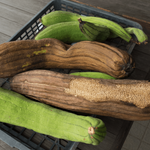
When the fruit becomes lighter and the skin starts to feel looser against the inside, and the color turns yellow to brownish, the fruit is ready to be harvested. Preferably harvest the fruits before they turn completely brown and the skin becomes very dry, as it can be difficult to peel the fruits without damaging the inside otherwise.
Pinch off the fruits from the vine and let them dry for another day before soaking them for a couple of hours to ease the removal of the skin. Do not soak longer than 1 day as bacterial growth may occur. Remove seeds by opening the bottom of the fruit and shaking them out. Peel. Rinse the luffa sponge with water to remove loose plant debris. Lay out to dry again – outdoors in the sun protected from rain works excellently.
If you still let the fruits remain on the plant until they are completely brown and dry, it is easiest to remove the skin with a regular kitchen knife after soaking.
If frost risk approaches and your fruits still do not look ready, an early harvest is recommended anyway, as repeated frost exposure damages foliage and fruits can suffer from rot. Pinch off the fruits and hang them indoors with the skin on to dry. When you see the skin go from firm to loose (slightly shriveled appearance) and the color shifts to brownish, it is time to open the skin.
Fruits can reach 75 cm under favorable conditions.
Sowing:
The sponge gourd needs some time to develop mature (strongly) fibrous fruits. Therefore, sow preferably already in February/March and start indoors. When the frost risk is over, the plants can be planted out.
Soak seeds 1 day in advance. Sow seeds in seed soil, cover with a thin layer of soil. Keep the sowing moist. To more easily maintain good moisture, the sowing can be covered with plastic wrap with air holes.
Characteristics:
Annual: Annual
Growing site: sun
Height: 2 m
Germination time: 5-20 days
Subscribe and save 5%!


Luffa / Sponge gourd (Luffa aegyptiaca)
Orders received before Sunday morning are packed Sunday to Monday.
See our delivery terms.
In stock - Ready to be shipped
Share
SEEDS (15 pcs/bag)
Common names: Luffa, Sponge gourd, Wash sponge gourd, Bath sponge vine
Scientific name: Luffa aegyptiaca
Family: Cucurbit family
History & use:
Grown and used since the 3rd century in the Roman Empire. Young fruits were eaten, mature fruits were used as bath sponges. The luffa sponge was until WWII the most used sponge in the USA.
The young, green fruit is eaten as a vegetable similar to common cucumber. Quite early in the fruit’s life, it begins to form a distinct fibrous structure inside. On a fully ripe fruit, the skin easily peels off from the fibrous inside, resulting in a nearly perfect sponge that can be used just like our usual household sponges – for washing dishes, in the bathroom, or as a cleaning sponge.
An advantage of using a luffa sponge is that it stays fresh significantly longer than a "regular" synthetic sponge.
If you cut the luffa sponge lengthwise so you can turn it inside out, you can use the more textured inside as a stronger scrub and the smoother outside as a gentler scrub.
Edible younger shoots, leaves, and flowers – a common way is to "stir-fry" leaves and shoots in a little soy sauce and other Asian sauces. Seeds left over after harvesting mature luffa can be roasted and eaten like pumpkin seeds.
The fibers running along the edges of the fruit are durable and can be used as cords, for example, to tie up other plants.
The flowers are bright yellow and have a lovely scent.
Cultivation:
The sponge gourd prefers a sunny spot with good water supply. It grows best in places with sunlight all day. If you have a greenhouse, it is a perfect place for the sponge gourd.
Thrives best in humus-rich, well-drained, and nutrient-rich soil. Regular feeding is preferred.
Give plenty of space for climbing for optimal growth.
At first, the fruit is firm in shape and green in color. The fruit is edible when it is about 10 cm long. Shortly after that, a fibrous structure begins to form inside the skin, making the fruit unsuitable for eating purposes.
When the fruit becomes lighter and the skin starts to feel looser against the inside, and the color turns yellow to brownish, the fruit is ready to be harvested. Preferably harvest the fruits before they turn completely brown and the skin becomes very dry, as it can be difficult to peel the fruits without damaging the inside otherwise.
Pinch off the fruits from the vine and let them dry for another day before soaking them for a couple of hours to ease the removal of the skin. Do not soak longer than 1 day as bacterial growth may occur. Remove seeds by opening the bottom of the fruit and shaking them out. Peel. Rinse the luffa sponge with water to remove loose plant debris. Lay out to dry again – outdoors in the sun protected from rain works excellently.
If you still let the fruits remain on the plant until they are completely brown and dry, it is easiest to remove the skin with a regular kitchen knife after soaking.
If frost risk approaches and your fruits still do not look ready, an early harvest is recommended anyway, as repeated frost exposure damages foliage and fruits can suffer from rot. Pinch off the fruits and hang them indoors with the skin on to dry. When you see the skin go from firm to loose (slightly shriveled appearance) and the color shifts to brownish, it is time to open the skin.
Fruits can reach 75 cm under favorable conditions.
Sowing:
The sponge gourd needs some time to develop mature (strongly) fibrous fruits. Therefore, sow preferably already in February/March and start indoors. When the frost risk is over, the plants can be planted out.
Soak seeds 1 day in advance. Sow seeds in seed soil, cover with a thin layer of soil. Keep the sowing moist. To more easily maintain good moisture, the sowing can be covered with plastic wrap with air holes.
Characteristics:
Annual: Annual
Growing site: sun
Height: 2 m
Germination time: 5-20 days

30 day returns
- Choosing a selection results in a full page refresh.
- Opens in a new window.